Your State's Grid
Phoenix Heat Outages: The Backup Power Reality
No battery you can afford will air-condition a house at 115°F. Here is what backup power is actually for in Arizona, and the decision that matters more than any purchase.
We earn a commission on purchases made through links on this page, at no extra cost to you. How this works.
What's in this article
Why Arizona is a different problem
The danger is temperature, not darkness. In an ice storm, a battery running a gas furnace blower keeps a whole house habitable on a few hundred watts. There is no equivalent in the heat. Cooling is thermodynamically expensive in a way heating a house with gas is not, and that asymmetry is the whole story.
Night does not save you. A Phoenix house that has been closed and unpowered through a 115°F afternoon is still dangerously hot at midnight. Interior temperatures keep climbing for hours after the outage starts.
Solar works brilliantly here — for the wrong things. Arizona has the best solar resource in the country, and a panel will keep a fridge and fans going indefinitely. It will not touch an air conditioner's load.
Outages here are usually short. Most Valley outages are hours, not days — monsoon microbursts, equipment failures in extreme heat, occasional wildfire-related events. That is genuinely good news, and it should shape what you buy: enough to cover an afternoon and an evening, not a week.
What to actually buy
A 1,000Wh unit with a 1,500W inverter is the right size for most Phoenix households. That covers:
- The fridge for 18–22 hours
- Two fans overnight, easily. See How Long Can a Power Station Run a Fan?
- Phones, tablets, a laptop, a CPAP
- A router, if your ISP's equipment is still alive
That is a few hundred to under a thousand dollars, and it addresses the real risks: spoiled food, no communication, and no way to sleep.
Add a 100–200W solar panel. In this climate that is close to free power, and it means a multi-day outage does not end with a dead battery. Arizona is the single best state in the country for this pairing.
If you want compressor cooling, the honest option is a small window unit and a battery in the 2,000–4,000Wh class, giving you a few hours in one closed room. It is expensive and it is a real option for someone who cannot easily leave. Read Can a Power Station Run a Window AC Unit? first, with clear eyes.
Do not buy a mid-size battery believing it will run a portable AC. It is the most common wrong purchase made in this state, usually in a panic during a heat event. The numbers are here.
The plan that keeps people alive
Equipment is the smaller half of this. The larger half:
Decide your leave threshold in advance, in writing. Something like: if power is out and the forecast high is over 105°F, we go to the cooling center by 11am. Write it on the fridge. Deciding in the moment, in a hot house, with a battery you paid for sitting in the hall, is how people talk themselves into staying.
Know where you are going. Maricopa County and neighbouring counties operate a network of cooling and hydration centers during the summer, and their locations and hours change year to year. Look up this year's list now, print it, and keep a copy that does not need a charged phone.
Close the house at dawn. Blinds, curtains, everything shut before the sun is on the walls. Open up only when the outside air drops below the inside air, usually late night. Most people do this backwards and lose several degrees for nothing.
One room, closed, fans and wet towels. Concentrate everything into the smallest interior room. Evaporation off wet fabric in moving air does more per watt than any appliance you own.
Drink before you are thirsty, and watch the older people in the household. Heat illness arrives quietly and confusion is an early sign.
Above about 95°F with humidity, fans stop working. In dry Arizona heat fans stay useful longer than in Houston — evaporation is efficient here — but there is still a ceiling, and past it you need to be somewhere else.
The utility side, which is free
Get on APS's or SRP's medical baseline / life-support list if anyone in the house depends on powered equipment or refrigerated medication. It does not guarantee anything, but it means priority information and, in some cases, advance notice. See Medical Baseline and Life-Support Utility Programs.
Know your utility's outage map and reporting number before the monsoon season. Have it written down.
Understand your rate plan's peak hours. Not an outage issue, but if you are buying a battery anyway, charging it off-peak is free money in a state with steep time-of-use pricing.
The honest summary
Backup power in Arizona is food, communication and time. It is a good purchase for those three things and a bad purchase if you expect it to replace air conditioning.
The most valuable thing on this page is not a product. It is the decision, made in advance, about the temperature at which you leave the house — and the printed list of where you are going.
The short version
- No portable battery air-conditions a Phoenix house. Accept that and buy for the other risks.
- 1,000Wh with a 1,500W inverter covers fridge, fans, phones and a CPAP overnight.
- Add a solar panel. Arizona is the best state in the country for that pairing.
- Close the house at dawn, open it late at night, and concentrate into one room with fans and wet towels.
- Write down your leave threshold and this year's cooling center list before the monsoon.
The picks, in detail
Specs come from data/products.json, so they're the same everywhere on this site.
Bluetti
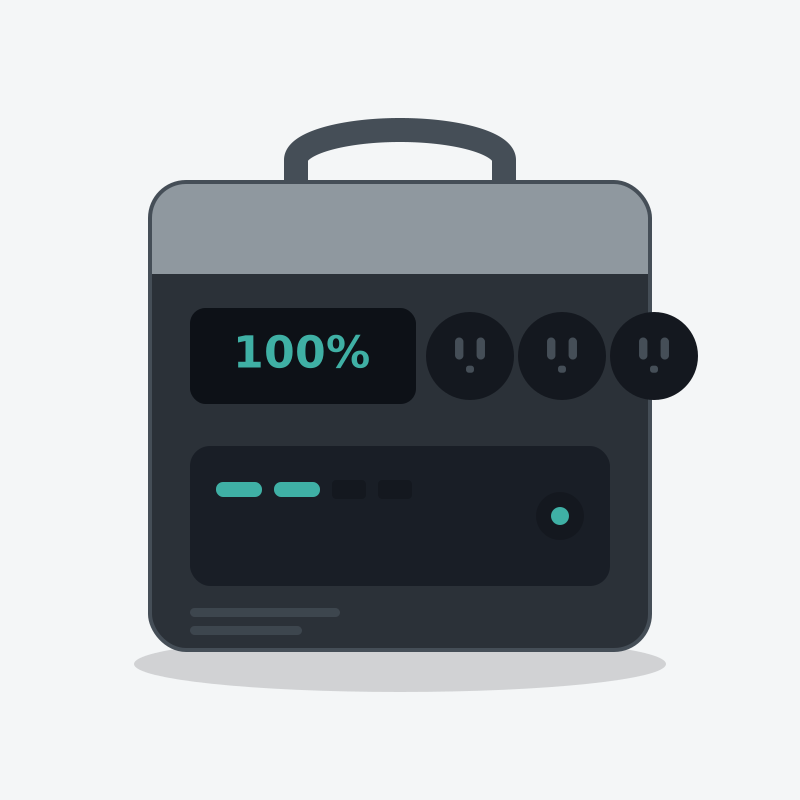
Bluetti AC200L
Specs unverifiedA lot of battery for the money, with the port selection of a small workshop.
- Capacity
- 2,048 Wh
- AC output
- 2,400W
- Weight
- 61.9 lb
What's good
- Expandable, unlike most Bluetti units at this size
- A genuinely useful spread of ports including a 30A RV outlet
- Fast recharge for a 2kWh unit
What's annoying
- Shorter warranty than EcoFlow and Jackery offer
- Big and awkward to store
- Bluetti's US service turnaround has been inconsistent
Who this is wrong for
Small apartments. It's physically large and you will trip over it.
EcoFlow
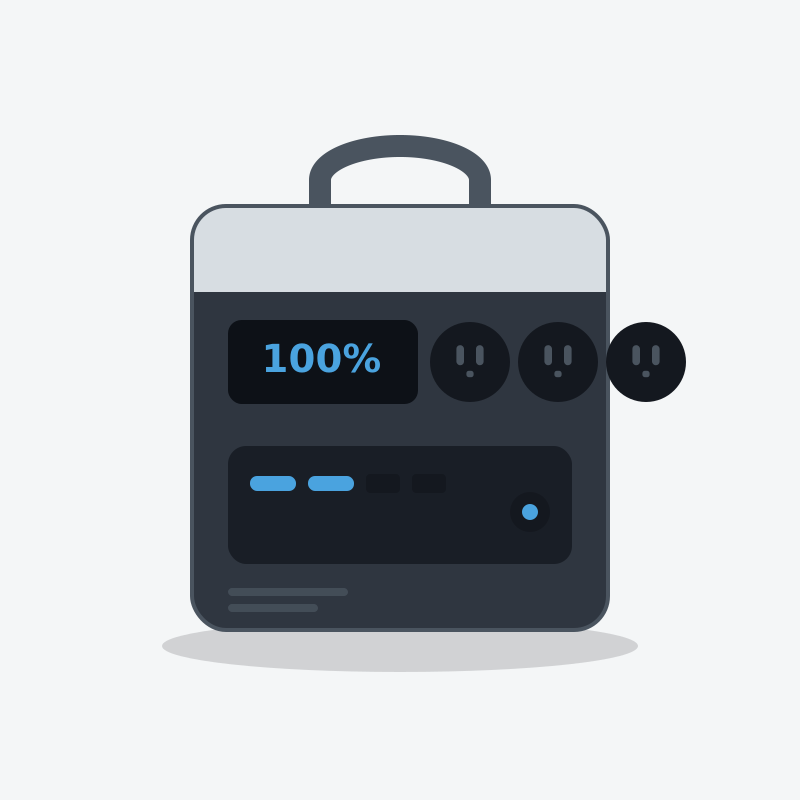
EcoFlow DELTA 2
The one most people should buy. It refills fast enough that a short sunny break between storm bands actually matters.
- Capacity
- 1,024 Wh
- AC output
- 1,800W
- Weight
- 27 lb
What's good
- Wall recharge is genuinely quick — useful when power flickers back for an hour
- LiFePO4 cells, so it tolerates being left plugged in for years
- Six AC outlets means no daisy-chained power strips on the kitchen counter
- Add an extra battery later instead of buying a whole second unit
What's annoying
- The fan is audible in a quiet bedroom at night
- 1800W ceiling rules out most space heaters and hair dryers
- Expansion batteries cost nearly as much as the unit itself
Who this is wrong for
Anyone who needs to power a well pump, an electric water heater or a central AC. It will not start them, and it is not a whole-home unit.
EcoFlow
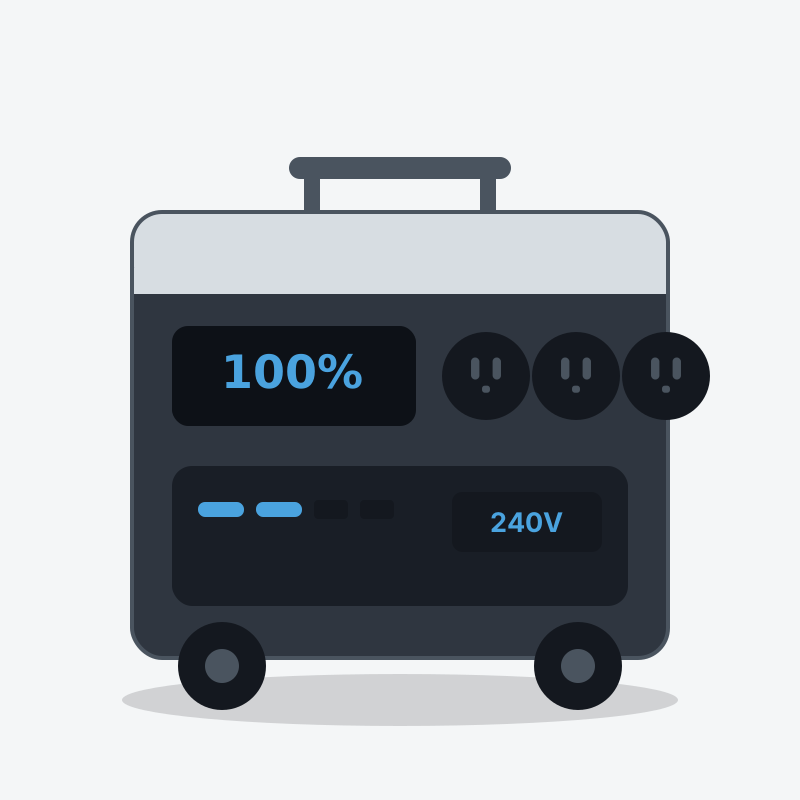
EcoFlow DELTA Pro 3
Specs unverifiedThe first portable unit that can honestly claim to back up parts of a house, including 240V circuits.
- Capacity
- 4,096 Wh
- AC output
- 4,000W
- Weight
- 113 lb
What's good
- 240V output covers well pumps and some dryers, which almost nothing else portable does
- Pairs with a transfer switch so you stop running extension cords through a window
- Chains with extra batteries into genuinely serious capacity
What's annoying
- Costs about the same as a permanently installed standby generator once you add a transfer switch
- 113 lb means it lives where you put it
- The install to make it useful is an electrician job, not a weekend project
Who this is wrong for
Anyone who wants to move it more than once. It has wheels for a reason, and stairs will beat you.
Questions people actually ask
Can a power station run air conditioning in Phoenix?
What should I buy for a summer outage in Arizona?
How do you stay safe in a heat outage?
Does my utility have a program for heat emergencies?
Who wrote this
Dhruvil Domadiya
Founder and editor, GreenCommuteGuide
I started GreenCommuteGuide because backup power is sold with numbers that sound impressive and mean very little — watt-hours on the box, surge ratings that turn out to be a boost mode, charge times quoted to 80% and printed as though they were full. I set the rules this site runs on: every spec is checked against the manufacturer's own documentation, anything we have not verified is marked as unverified on the page rather than quietly published, prices are never shown because they go stale, and every review names at least one product not to buy and who it is wrong for. Where I have not tested something myself, the page says so.
- · Sets and enforces the editorial standards on this site — unverified claims are flagged on the page, and the build fails if they are not
- · Specs are taken from manufacturers' own published documentation, never from retailer listings, and the source and date are recorded for each product
- · No payment is accepted for a rating, a ranking, or a positive verdict
Read this next
- Run This ApplianceCan a Power Station Run a Portable AC Unit?Yes, for about an hour. That is the whole honest answer, and here is what to do instead when it is 105°F and the grid is down.
- Run This ApplianceHow Long Can a Power Station Run a Fan? (The Best Deal in Summer Backup)A day and a half on a 1,000Wh unit. Fans are the single most efficient thing you can plug into a battery in a heat wave, and almost nobody plans around them.
- Your State's GridBackup Power for Texas Outages: What Actually Works HereERCOT is its own grid with its own failure modes, and Texas outages hit in heat as often as ice. Here is what to buy for both.
- Your State's GridBackup Power for Alabama: Dixie Alley Tornadoes and Gulf HurricanesApril 2011 put a million Alabamians in the dark after the worst tornado outbreak in a generation. Add Gulf hurricanes on the coast and summer heat everywhere, and here is the plan for a state that gets both.