Home Outage & Backup
Medical Baseline and Life-Support Utility Programs: The Free Thing Almost Nobody Signs Up For
It takes one form and a doctor's signature. It can mean advance notice of shutoffs, priority restoration information, and in some states a lower bill. It does not mean your power stays on.
We earn a commission on purchases made through links on this page, at no extra cost to you. How this works.
What's in this article
What these programs actually provide
The details vary by utility and by state, but the common elements:
Advance notice of planned outages. For anyone in a wildfire shutoff area this is the single biggest benefit — knowing 48 hours ahead that the power is going off is transformative if you are arranging medical equipment.
Extra contact attempts before a shutoff. Utilities typically make additional attempts to reach enrolled customers, including in-person attempts in some cases, before a planned de-energization.
Protection from disconnection for non-payment, usually with conditions and often seasonal. This varies enormously by state.
A higher allowance of electricity at the lower tier rate, in states with tiered pricing. In California's medical baseline this is a meaningful monthly saving because running medical equipment pushes households into expensive rate tiers.
Being on a list at all, which matters for restoration prioritisation information and for outreach during a long event.
What it does not provide
It is not priority restoration in the sense people imagine. Utilities restore power by circuit — hospitals, substations, and the repairs that bring back the most customers fastest. Being enrolled does not send a truck to your street first.
It is not a backup power plan. It is a notification and billing programme. The battery is still your job.
Anyone telling you to enroll instead of preparing has misunderstood the programme. Enroll and prepare.
How to sign up
The process is broadly the same everywhere:
- Search your utility's site for "medical baseline" or "life support customer" or "medical certificate program." Every major US utility has some version.
- Download the form. It usually asks for the equipment, the condition category, and the account details.
- Get it signed by a licensed medical professional. Doctor, nurse practitioner, or physician assistant, depending on the state.
- Submit it. Processing is typically a few weeks.
- Renew it. Many programmes require recertification periodically — annually or every couple of years. Put the renewal date in your calendar, because lapsing is common and silent.
If you rent, this attaches to the utility account. If the account is in the landlord's name, ask the utility how to handle it — most have a process.
Do it now, not during the event
The form needs a doctor's signature and takes weeks to process. During a heat wave or a wildfire evacuation, nobody is signing anything.
This is a Tuesday-afternoon task. It costs nothing but a phone call and an appointment you probably have anyway.
The other calls worth making the same week
While you have the energy for administrative work, three more:
Your pharmacy. Ask about their emergency supply and early-refill policy. Many will fill ahead of a forecast storm and many will replace medication spoiled in a declared emergency. Knowing this in advance is worth more than any equipment.
Your equipment supplier. Ask what battery options exist for your specific device, whether they supply a DC cable, and what happens if the device is damaged. Many CPAP and oxygen suppliers have loaner programmes.
Your local emergency management office. Some counties keep a voluntary registry of residents with functional or medical needs, used during evacuations. Availability and usefulness varies considerably by county, but where it exists it is free.
And then build the actual plan
The programme is layer one. Here is the rest, in order of what fails first:
Know your device's real draw. Plug it into a $20 power meter for a night. A CPAP with the humidifier off draws far less than most people assume; with it on, several times more. That measurement changes what you need to buy.
Size the battery for the nights you need, not the days. For a CPAP, one night is often 100–200Wh, which is a small unit. See Best Solar Generator for a CPAP Machine.
For an oxygen concentrator, the numbers are much larger and the plan should include cylinders, not just a battery. Talk to your supplier before buying anything.
Have a second layer. Battery, plus a way to charge it (car, panel, neighbour), plus a place to go. Three layers, because any one of them can fail.
Run a drill. Actually unplug the device and run it from the battery for a full night before you need to. How to do that properly.
We cover the equipment side in Best Solar Generator for Medical Equipment at Home.
The honest framing
A backup battery should be one layer of a medical power plan, never the whole plan. Batteries run out, chargers fail, and a two-day outage outlasts almost any portable unit.
The programme, the pharmacy relationship, the supplier's loaner policy, the charged car, the friend across town, and the battery — together those are a plan. Any one of them alone is a hope.
The short version
- Free, requires a form and a medical signature, takes weeks to process. Do it now.
- Benefits: advance notice of planned shutoffs, extra contact attempts, disconnection protection, and lower rates in tiered states.
- It does not keep your power on or send a repair crew to your street first.
- Call your pharmacy and equipment supplier the same week — both have emergency policies worth knowing.
- Measure your device's actual draw, then size the battery. Then test it for a full night.
This is general information about utility programmes, not medical advice. Decisions about medical equipment belong with your clinician and your supplier.
The picks, in detail
Specs come from data/products.json, so they're the same everywhere on this site.
EcoFlow
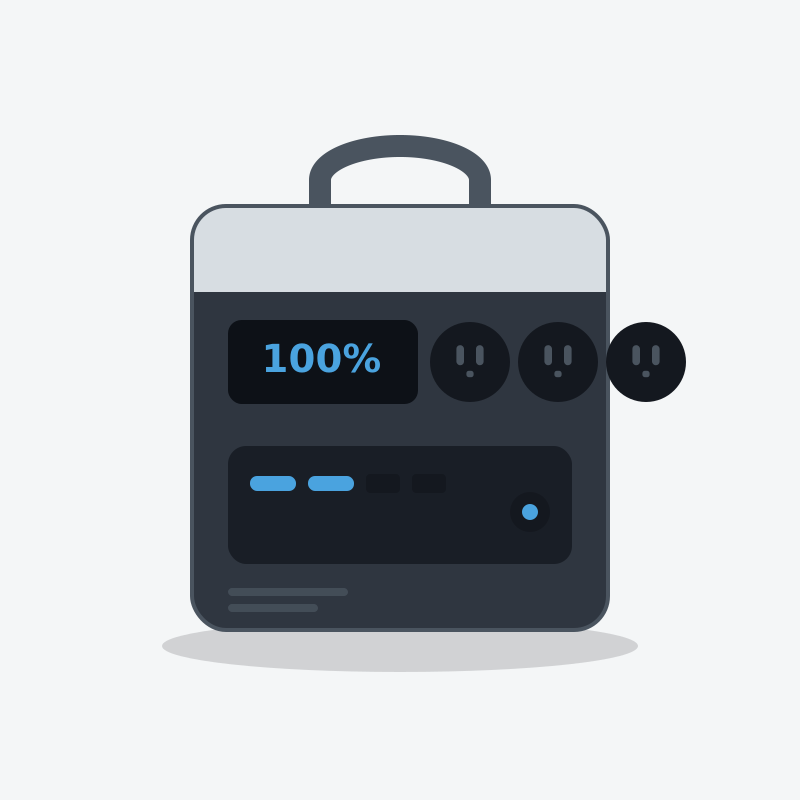
EcoFlow DELTA 2
The one most people should buy. It refills fast enough that a short sunny break between storm bands actually matters.
- Capacity
- 1,024 Wh
- AC output
- 1,800W
- Weight
- 27 lb
What's good
- Wall recharge is genuinely quick — useful when power flickers back for an hour
- LiFePO4 cells, so it tolerates being left plugged in for years
- Six AC outlets means no daisy-chained power strips on the kitchen counter
- Add an extra battery later instead of buying a whole second unit
What's annoying
- The fan is audible in a quiet bedroom at night
- 1800W ceiling rules out most space heaters and hair dryers
- Expansion batteries cost nearly as much as the unit itself
Who this is wrong for
Anyone who needs to power a well pump, an electric water heater or a central AC. It will not start them, and it is not a whole-home unit.
Bluetti
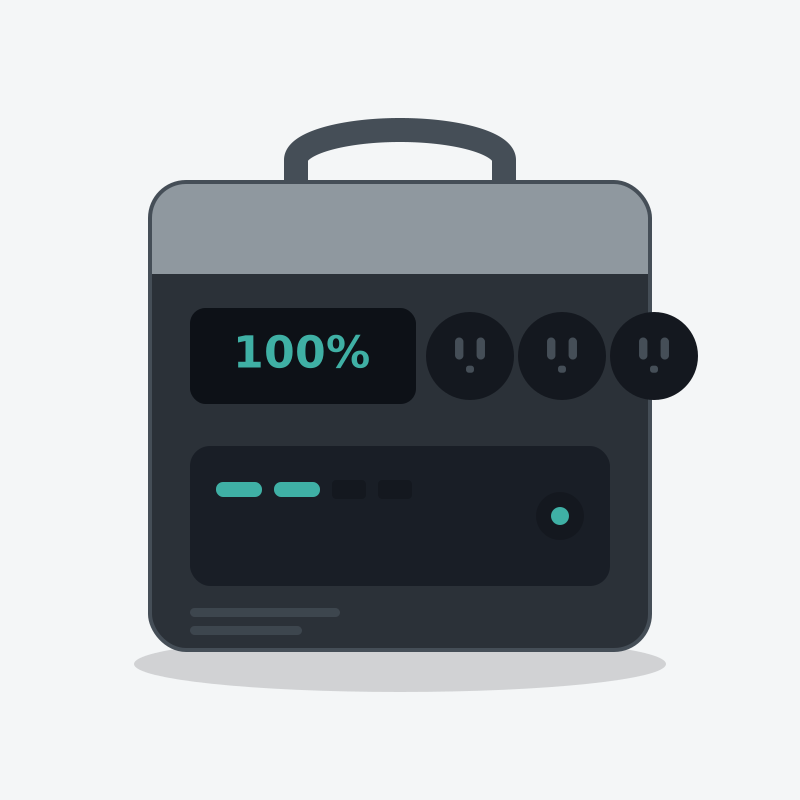
Bluetti AC200L
Specs unverifiedA lot of battery for the money, with the port selection of a small workshop.
- Capacity
- 2,048 Wh
- AC output
- 2,400W
- Weight
- 61.9 lb
What's good
- Expandable, unlike most Bluetti units at this size
- A genuinely useful spread of ports including a 30A RV outlet
- Fast recharge for a 2kWh unit
What's annoying
- Shorter warranty than EcoFlow and Jackery offer
- Big and awkward to store
- Bluetti's US service turnaround has been inconsistent
Who this is wrong for
Small apartments. It's physically large and you will trip over it.
Questions people actually ask
What is a medical baseline program?
Does medical baseline guarantee my power stays on?
How do I sign up for a medical baseline program?
Who qualifies for these programs?
Who wrote this
Dhruvil Domadiya
Founder and editor, GreenCommuteGuide
I started GreenCommuteGuide because backup power is sold with numbers that sound impressive and mean very little — watt-hours on the box, surge ratings that turn out to be a boost mode, charge times quoted to 80% and printed as though they were full. I set the rules this site runs on: every spec is checked against the manufacturer's own documentation, anything we have not verified is marked as unverified on the page rather than quietly published, prices are never shown because they go stale, and every review names at least one product not to buy and who it is wrong for. Where I have not tested something myself, the page says so.
- · Sets and enforces the editorial standards on this site — unverified claims are flagged on the page, and the build fails if they are not
- · Specs are taken from manufacturers' own published documentation, never from retailer listings, and the source and date are recorded for each product
- · No payment is accepted for a rating, a ranking, or a positive verdict
Read this next
- Run This ApplianceBest Solar Generator for Medical Equipment at HomeA battery should be one layer of your plan, never the whole plan. Here is how to size it properly and what to arrange before you need it.
- Run This ApplianceKeeping Insulin and Medication Cold in a Power OutageThe first thing to know is that most insulin does not need a fridge as urgently as people think. The second is what to do about the insulin that does.
- Your State's GridCalifornia PSPS Backup Power: What to Buy Before the Next ShutoffPSPS events are scheduled, not random. That changes everything about what you should buy — and it makes solar panels far more useful here than elsewhere.
- Home Outage & BackupPayback Math: How Many Outages Before Backup Power Pays For Itself?Four numbers, five minutes, and an answer specific to your house. For a lot of people the honest result is 'buy the ice instead' — and we would rather tell you that.