Your State's Grid
Backup Power for Iowa: The 2020 Derecho and What It Taught the State
The August 2020 derecho was the costliest thunderstorm in US history, and it left Cedar Rapids dark for over a week with no warning. Iowa outages are wind in summer and ice in winter, and here is what covers both.
We earn a commission on purchases made through links on this page, at no extra cost to you. How this works.

What's in this article
10 August 2020, late morning. A line of storms that had formed in South Dakota reached Cedar Rapids with winds measured above 140 miles an hour — hurricane strength, on the prairie, with about an hour of warning. verify It flattened millions of acres of corn, took down most of the city's trees, and left hundreds of thousands of Iowans dark for over a week. verify
It was the costliest thunderstorm in American history, and it is the one every Iowa plan should be built against.
Why Iowa is its own problem
Derechos with no warning. The 2020 storm gave an hour. Iowa sits in the corridor these events follow, and they arrive in summer heat.
Ice storms. Freezing rain across the state coats lines and brings trees down for days. Cold, grey, multi-day.
Rural distances. Most of Iowa is farmland served by co-ops and municipal utilities with long lines and few crews. Restoration after a real event is slow.
Gas heat is the norm. The good news for winter.
Trees in the cities. Cedar Rapids lost most of its canopy in 2020 because it was over the lines. Des Moines and the Quad Cities have the same exposure.
Summer: the derecho
The lesson of 2020 is that there is no time to prepare. Plugged in permanently is the only preparation — a unit at 100% when the wind hits is the plan, and one at 40% in the basement is not.
Fans, not AC. A box fan on a battery runs for a day. A window unit empties a 2,000Wh pack in hours. August in Iowa is hot, and one closed room with fans is the strategy.
Post-derecho sky is clear. For a week. That is what makes panels the recharge — a 1,000–2,000Wh unit with 400W of panels runs the fridge, fans, phones and internet indefinitely.
| Appliance | EcoFlow DELTA 21,024 Wh | Anker SOLIX C10001,056 Wh | Bluetti AC200L2,048 Wh |
|---|---|---|---|
| Full-size refrigerator~150W running, cycles ~35% of the time | 17 hr | 17 hr | 33 hr |
| Box fan~75W running | 12 hr | 12 hr | 23 hr |
| Wi-Fi router + modem~20W running | 44 hr | 45 hr | 87 hr |
| Gas furnace blower~400W running, cycles ~40% of the time | 5.4 hr | 5.6 hr | 11 hr |
Winter: the furnace
Most Iowa houses heat with gas. Power the furnace blower through a transfer switch — a few hundred watts cycling — and the whole house stays warm on a 1,000Wh unit. Needs an electrician, fitted in autumn. The setup.
Under ice-storm sky, the car is the recharge. And the battery lives indoors — Iowa January is well below freezing.
What we'd buy, by situation
Des Moines, Cedar Rapids, the Quad Cities — gas heat
A 1,000Wh unit, a transfer switch, and panels, plugged in permanently. The EcoFlow DELTA 2 with two PV200s. The transfer switch covers winter; the panels cover the derecho week.
Rural Iowa, co-op territory, farms
2,000Wh class, panels, and a car adapter. The Bluetti AC200L. Rural restoration after a big event is slow, and the plan needs both recharge routes.
On a well, or with livestock equipment
The whole-home conversation. A well pump needs 240V, and a farm with electric livestock waterers or a milking parlour needs a standby generator quote alongside the battery.
What not to buy in Iowa
A unit in the basement at 40%. The derecho gave an hour. Plugged in or it is not a plan.
A battery for the AC. August on the prairie is hot. Fans, one room, curtains closed.
A generator without stored fuel or a CO alarm. 2020 proved the pumps stop, and every ice storm produces carbon monoxide deaths in garages.
The free things, which matter most
Plug it in and leave it. The whole answer to a no-warning outage.
Trim the trees over your service drop. Cedar Rapids learned what canopy over lines costs.
Fill the freezer with water jugs before summer. Mass holds cold for days.
Register medical equipment with MidAmerican, Alliant or your co-op. Free, one form.
The picks, in detail
Specs come from data/products.json, so they're the same everywhere on this site.
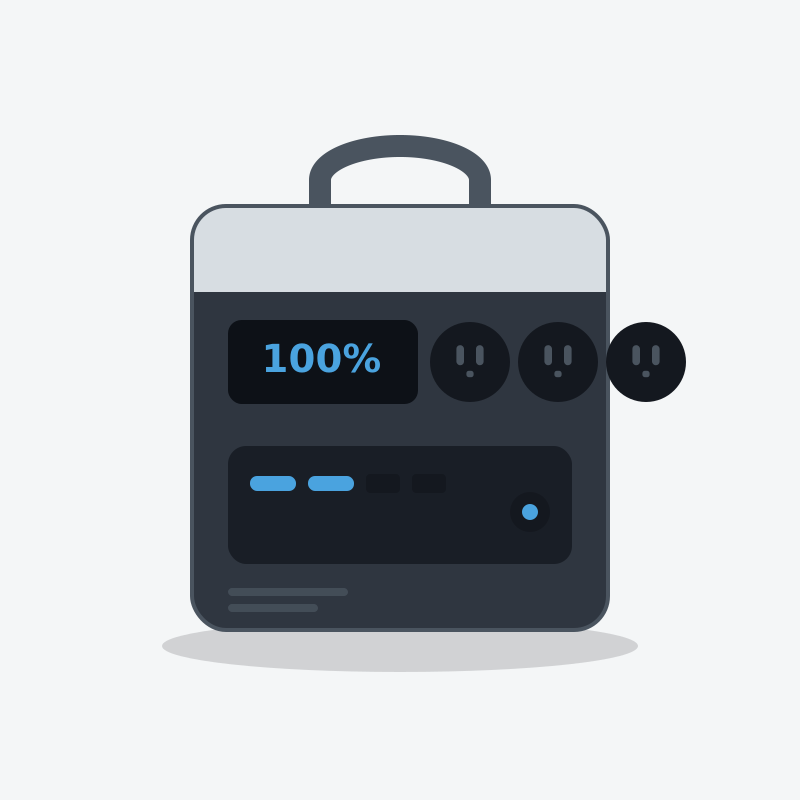
EcoFlow
EcoFlow DELTA 2
The one most people should buy. It refills fast enough that a short sunny break between storm bands actually matters.
- Capacity
- 1,024 Wh
- AC output
- 1,800W
- Weight
- 27 lb
What's good
- Wall recharge is genuinely quick — useful when power flickers back for an hour
- LiFePO4 cells, so it tolerates being left plugged in for years
- Six AC outlets means no daisy-chained power strips on the kitchen counter
- Add an extra battery later instead of buying a whole second unit
What's annoying
- The fan is audible in a quiet bedroom at night
- 1800W ceiling rules out most space heaters and hair dryers
- Expansion batteries cost nearly as much as the unit itself
Who this is wrong for
Anyone who needs to power a well pump, an electric water heater or a central AC. It will not start them, and it is not a whole-home unit.
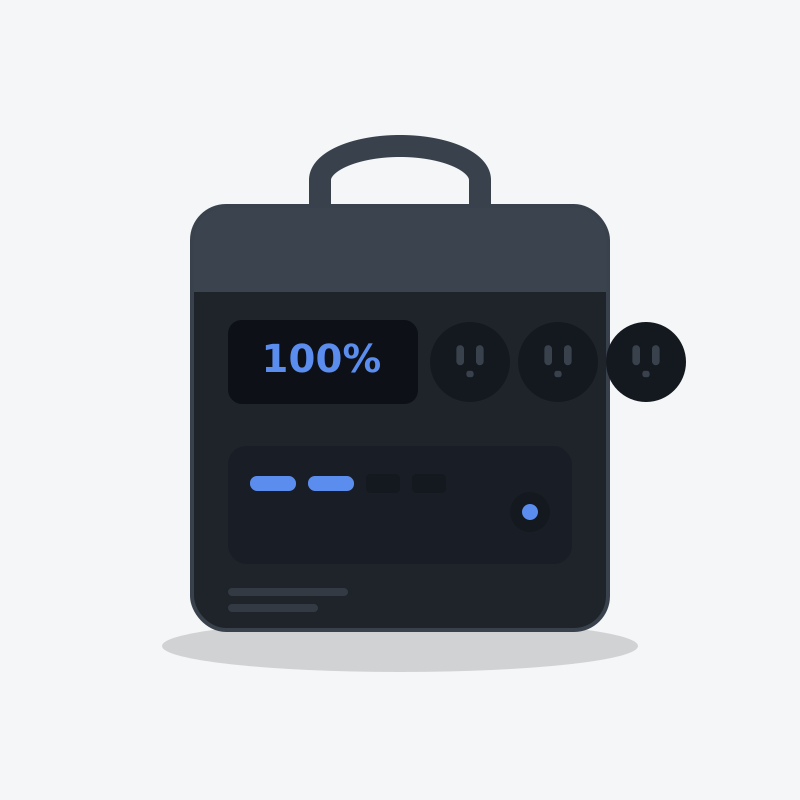
Anker
Anker SOLIX C1000
The best-built 1kWh unit on the market, and the one that fits an RV bay without a shoehorn.
- Capacity
- 1,056 Wh
- AC output
- 1,800W
- Weight
- 28.44 lb
What's good
- The most compact 1kWh box here — it genuinely fits where others don't
- Anker's warranty service is the least painful in this category
- Full wall recharge in under an hour
- Quiet fan behaviour under moderate load
What's annoying
- Expansion battery caps you at about 2,112Wh and is expensive
- Fewer solar input options than EcoFlow
- Anker discounts less often, so you rarely catch a deep sale
Who this is wrong for
People who need to run more than 1800W. And it won't grow with you — expansion is limited.

Bluetti
Bluetti AC200L
Specs unverifiedA lot of battery for the money, with the port selection of a small workshop.
- Capacity
- 2,048 Wh
- AC output
- 2,400W
- Weight
- 61.9 lb
What's good
- Expandable, unlike most Bluetti units at this size
- A genuinely useful spread of ports including a 30A RV outlet
- Fast recharge for a 2kWh unit
What's annoying
- Shorter warranty than EcoFlow and Jackery offer
- Big and awkward to store
- Bluetti's US service turnaround has been inconsistent
Who this is wrong for
Small apartments. It's physically large and you will trip over it.
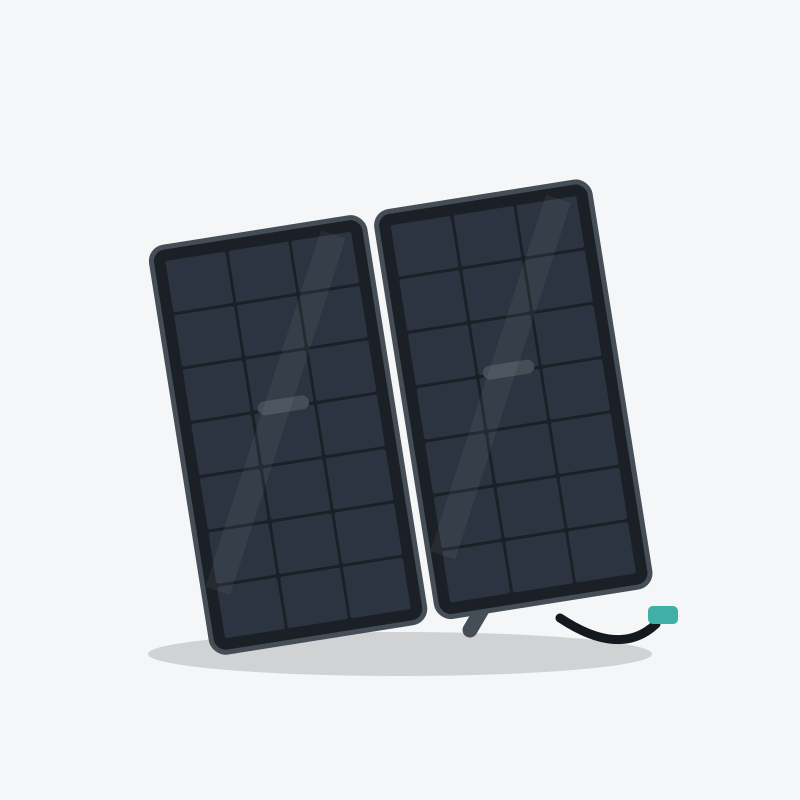
Bluetti
Bluetti PV200 200W Solar Panel
Specs unverifiedThe most watts per dollar in folding panels, with a case that feels like it'll outlast the warranty.
What's good
- Strong output for the money
- MC4 makes it universal across brands
- Durable long-fiber ETFE surface
What's annoying
- Four-fold design is awkward in wind
- No integrated USB output
- Kickstand angles are limited
Who this is wrong for
Quick grab-and-go trips. Unfolding four panels in wind is a two-person job.
Questions people actually ask
What was the 2020 Iowa derecho?
How long do Iowa outages last?
What size backup for an Iowa household?
Do I need solar panels in Iowa?
Which utility serves me in Iowa?
Who wrote this
Dhruvil Domadiya
Founder and editor, GreenCommuteGuide
I started GreenCommuteGuide because backup power is sold with numbers that sound impressive and mean very little — watt-hours on the box, surge ratings that turn out to be a boost mode, charge times quoted to 80% and printed as though they were full. I set the rules this site runs on: every spec is checked against the manufacturer's own documentation, anything we have not verified is marked as unverified on the page rather than quietly published, prices are never shown because they go stale, and every review names at least one product not to buy and who it is wrong for. Where I have not tested something myself, the page says so.
- · Sets and enforces the editorial standards on this site — unverified claims are flagged on the page, and the build fails if they are not
- · Specs are taken from manufacturers' own published documentation, never from retailer listings, and the source and date are recorded for each product
- · No payment is accepted for a rating, a ranking, or a positive verdict
Read this next
- Your State's GridMidwest Ice Storm Backup Power: Staying Warm When the Lines Come DownIf you have gas heat, one 400-watt load keeps your whole house warm. That single fact is worth more than any battery comparison.
- Your State's GridBackup Power for Ohio: Derechos, Ice and the AEP Load ShedsTwo derechos a decade apart, winter ice, and a June 2022 heat wave where AEP cut power to Columbus on purpose. Ohio outages come in three flavours and here is what covers all of them.
- Run This ApplianceCan a Solar Generator Run a Gas Furnace?Yes, and it is the single best trade in backup power. Your gas furnace already makes the heat — the battery only has to spin the fan.
- Run This ApplianceHow Long Can a Power Station Run a Fan? (The Best Deal in Summer Backup)A day and a half on a 1,000Wh unit. Fans are the single most efficient thing you can plug into a battery in a heat wave, and almost nobody plans around them.