Run This Appliance
Can You Run a Well Pump on a Solar Generator?
Mostly no, and the reason is one number nobody checks. Here is what it actually takes, and the cheaper trick that saves most people.
We earn a commission on purchases made through links on this page, at no extra cost to you. How this works.
What's in this article
The lights come back for a second and the whole house clicks. Then the tap gives you a cough of air and nothing else.
No power means no pump. No pump means no water, no toilet, no shower. On a well, an outage stops being an inconvenience about four hours in.
So people go shopping for a battery. And most of them buy the wrong thing, because they check the wrong number.
The number that decides it
Not capacity. Surge.
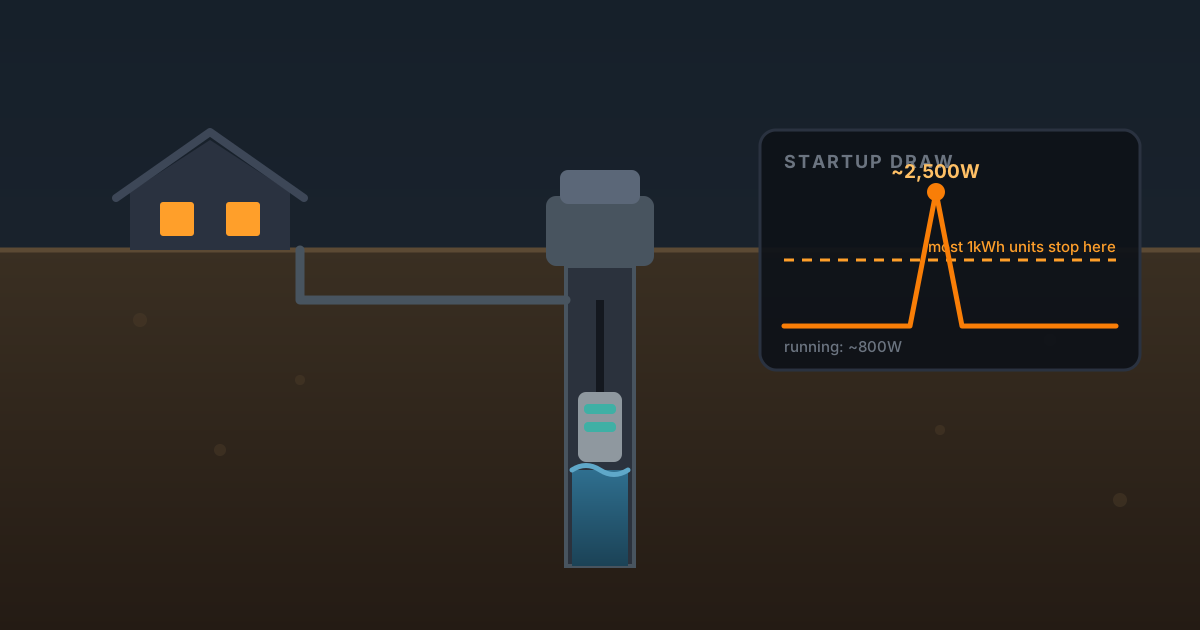
A half-horsepower submersible pump draws around 800 watts while it's running. That sounds easy — plenty of 1kWh units handle 800W all day.
But the instant the motor kicks over it spikes to somewhere near 2,500 watts, for well under a second. verify
If your inverter can't supply that instant, it doesn't run the pump slowly. It trips and shuts off. And it does that whether the battery reads 100% or 20%.
The second problem: 240V
Most residential submersible pumps in the US run on 240V. verify
Nearly every portable power station outputs 120V only. So even a unit with enough surge often has the wrong kind of outlet — there's physically nothing to plug into.
Shallow-well and jet pumps are sometimes 120V. Go look at the plate on your pressure switch or pump controller before you spend anything. That one check decides whether you're shopping for a $700 battery or a $4,000 system.
What actually works
Swipe the table sideways to see every column.
| Price | |||||||
|---|---|---|---|---|---|---|---|
| EcoFlowEcoFlow DELTA Pro 3LiFePO4 · expandable | 4,096 Wh | 4,000W | 6,000W | 113 lb | — | 5 yr | Check price for EcoFlow DELTA Pro 3 (opens in a new tab, affiliate link) |
| AnkerAnker SOLIX F3800LiFePO4 · expandable | 3,840 Wh | 6,000W | 9,000W | 132.3 lb | — | 5 yr | Check price for Anker SOLIX F3800 (opens in a new tab, affiliate link) |
| EcoFlowEcoFlow DELTA 2LiFePO4 · expandable | 1,024 Wh | 1,800W | 2,700W | 27 lb | 1h 20m | 5 yr | Check price for EcoFlow DELTA 2 (opens in a new tab, affiliate link) |
Specs come from data/products.json. Capacity is the figure on the box — real usable output is roughly 85% of it once you account for inverter losses.
EcoFlow DELTA Pro 3 and Anker SOLIX F3800 are the two units we cover that can genuinely do this. Both output real 240V and both surge well past what a half-horse pump asks for.
Both are also heavy, expensive, and need an electrician and a transfer switch before they're useful. You're not buying a gadget, you're buying an installation.
EcoFlow DELTA 2 is in that table as the control. 1,800W output. It will not start your pump. It's an excellent unit for a fridge and it is the wrong tool here, and plenty of articles will happily sell it to you anyway.
The cheap answer most people should take first
Fill the bathtub.
A standard tub holds around 40 to 60 gallons. verify That's flushing and washing for a family for two or three days, and it costs nothing but five minutes before the storm.
Add a few gallons of drinking water in jugs and you have covered the actual emergency for about twelve dollars.
Compare that to a 4,000Wh system plus an electrician. For someone who loses power twice a year for six hours, the bathtub is not a compromise — it's the correct answer, and the battery is the wasteful one.
Soft starters
There's a middle path worth knowing about.
A soft start device ramps the motor up instead of slamming it on, which flattens that spike. RV owners use them constantly to run rooftop air conditioners off batteries that could never handle the raw startup. verify
They exist for pumps too. But this is not a part to guess at — a mismatched controller can cook a submersible motor that lives 200 feet down a hole, and pulling one is not a cheap afternoon.
Ask a well technician. It might save you three thousand dollars, and it might not apply to your pump at all.
What we'd tell a neighbor
Short outages, suburban, good utility: bathtub and jugs. Don't buy anything.
Occasional day-long outages: bathtub, plus a 1kWh unit for the fridge and phones. Accept that the pump stays off. This is where most people land.
Multi-day outages, rural, no realistic alternative: a 4,000Wh 240V system with a transfer switch, installed by an electrician. Get quotes for a standby generator at the same time — at this budget they're genuinely competitive, and a generator doesn't run out on day three.
The one thing not to do is spend $900 on a mid-size battery hoping it'll cover the well. It won't, and you'll find out at the worst possible moment.
The picks, in detail
Specs come from data/products.json, so they're the same everywhere on this site.
EcoFlow
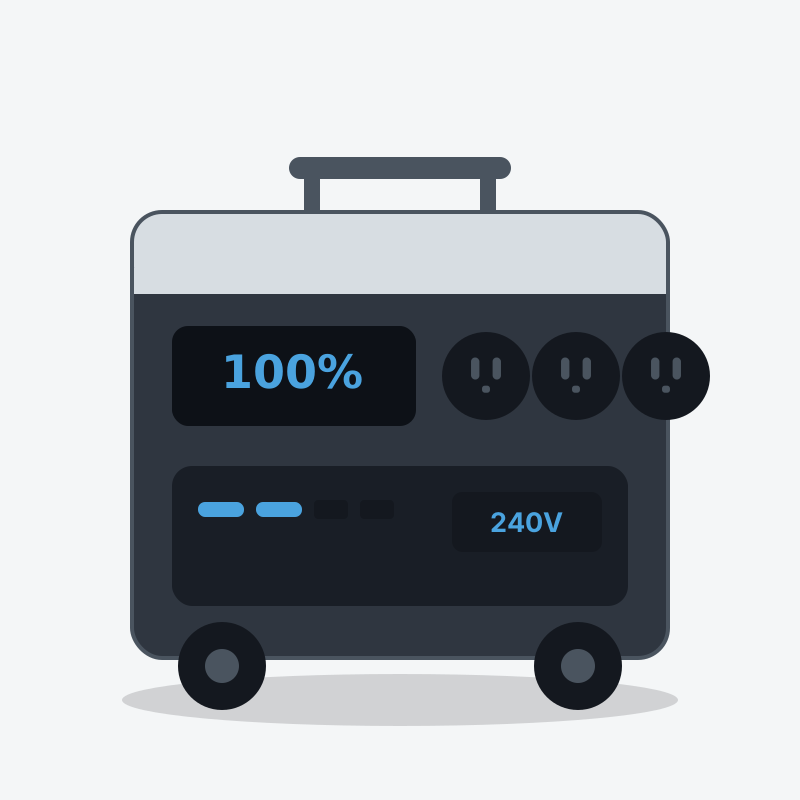
EcoFlow DELTA Pro 3
Specs unverifiedThe first portable unit that can honestly claim to back up parts of a house, including 240V circuits.
- Capacity
- 4,096 Wh
- AC output
- 4,000W
- Weight
- 113 lb
What's good
- 240V output covers well pumps and some dryers, which almost nothing else portable does
- Pairs with a transfer switch so you stop running extension cords through a window
- Chains with extra batteries into genuinely serious capacity
What's annoying
- Costs about the same as a permanently installed standby generator once you add a transfer switch
- 113 lb means it lives where you put it
- The install to make it useful is an electrician job, not a weekend project
Who this is wrong for
Anyone who wants to move it more than once. It has wheels for a reason, and stairs will beat you.
Anker
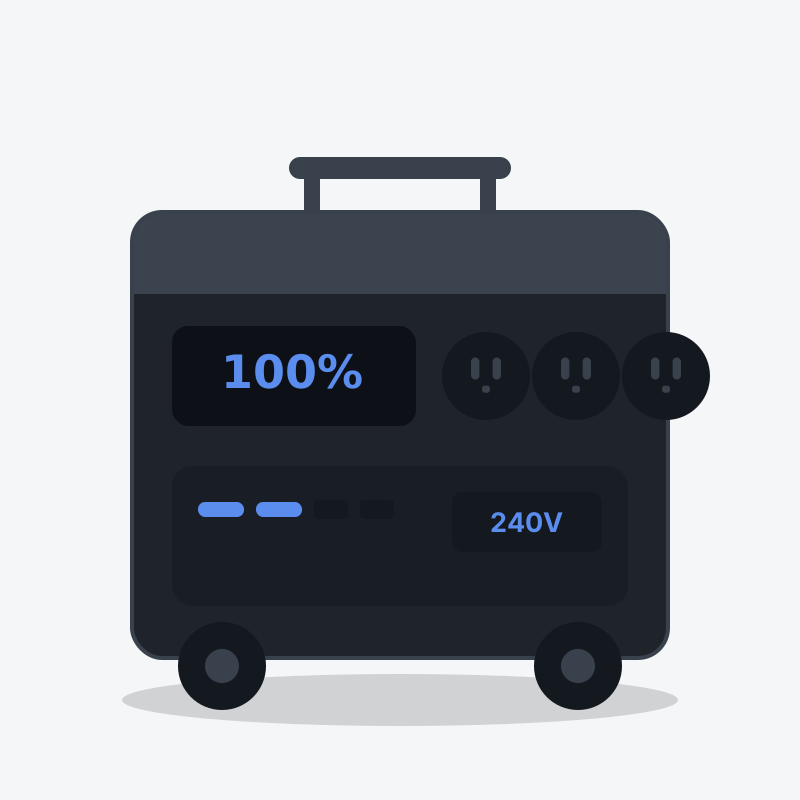
Anker SOLIX F3800
A home backup system wearing a portable power station's clothes. Treat it as an install, not a purchase.
- Capacity
- 3,840 Wh
- AC output
- 6,000W
- Weight
- 132.3 lb
What's good
- 6000W output covers nearly anything in a normal house, one at a time
- Real 240V, so the well pump and the dryer are on the table
- Stacks with expansion batteries into a very large bank
What's annoying
- 132 lb, and it needs a permanent home
- The transfer switch and electrician push the real cost well past the sticker
- At this price a standby generator deserves a serious look
Who this is wrong for
Renters. You cannot get the value out of it without wiring work you don't own.
EcoFlow
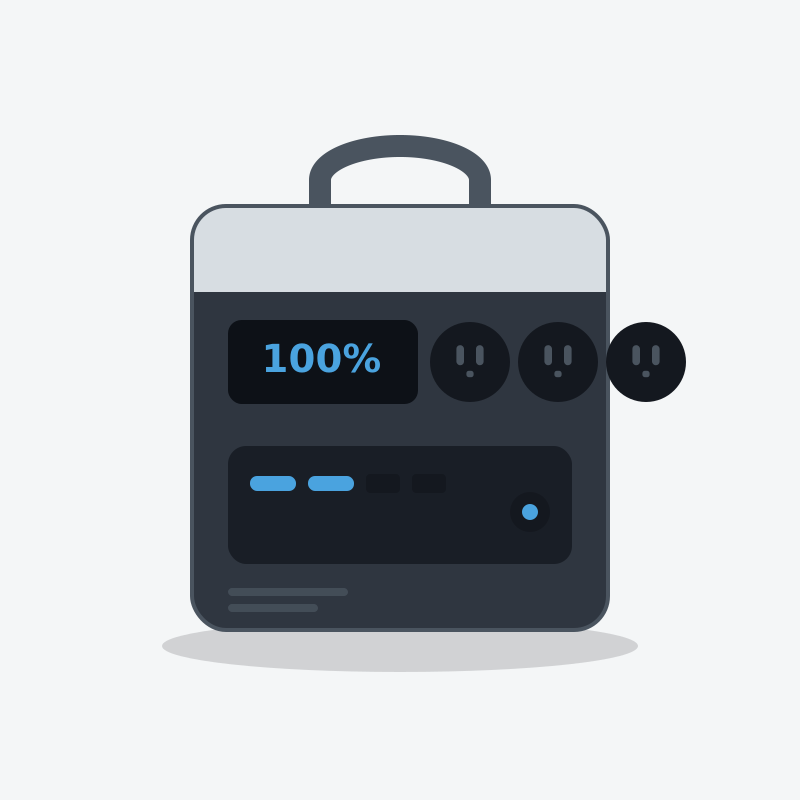
EcoFlow DELTA 2
The one most people should buy. It refills fast enough that a short sunny break between storm bands actually matters.
- Capacity
- 1,024 Wh
- AC output
- 1,800W
- Weight
- 27 lb
What's good
- Wall recharge is genuinely quick — useful when power flickers back for an hour
- LiFePO4 cells, so it tolerates being left plugged in for years
- Six AC outlets means no daisy-chained power strips on the kitchen counter
- Add an extra battery later instead of buying a whole second unit
What's annoying
- The fan is audible in a quiet bedroom at night
- 1800W ceiling rules out most space heaters and hair dryers
- Expansion batteries cost nearly as much as the unit itself
Who this is wrong for
Anyone who needs to power a well pump, an electric water heater or a central AC. It will not start them, and it is not a whole-home unit.
Questions people actually ask
What size solar generator do I need for a well pump?
Why won't my power station start my well pump?
Do I need 240V for a well pump?
Is there a cheaper way to have water during an outage?
Can a soft starter help my well pump run on a battery?
Who wrote this
Dhruvil Domadiya
Founder and editor, GreenCommuteGuide
I started GreenCommuteGuide because backup power is sold with numbers that sound impressive and mean very little — watt-hours on the box, surge ratings that turn out to be a boost mode, charge times quoted to 80% and printed as though they were full. I set the rules this site runs on: every spec is checked against the manufacturer's own documentation, anything we have not verified is marked as unverified on the page rather than quietly published, prices are never shown because they go stale, and every review names at least one product not to buy and who it is wrong for. Where I have not tested something myself, the page says so.
- · Sets and enforces the editorial standards on this site — unverified claims are flagged on the page, and the build fails if they are not
- · Specs are taken from manufacturers' own published documentation, never from retailer listings, and the source and date are recorded for each product
- · No payment is accepted for a rating, a ranking, or a positive verdict
Read this next
- Sizing & CalculatorsSurge Watts vs Running Watts: What Actually Trips Your UnitYour battery is big enough and it still shut off. This is why, and it is the spec almost nobody checks before buying.
- Home Outage & BackupDo You Need a Transfer Switch for a Solar Generator?Extension cords work fine for most people. Here is exactly when they stop working, what a transfer switch costs, and the shortcut that kills lineworkers.
- Home Outage & BackupBest Solar Generators for Power Outages in 2026Which battery actually gets your family through the night, which one is a waste of money, and how to tell the difference before you spend.
- Sizing & CalculatorsWhat Size Solar Generator Do I Need? (Free Calculator)Skip the guesswork. Tick the things you need to keep running, get a real watt-hour number, and see which units can actually do it.