Sizing & Calculators
MPPT vs PWM: Why Your Panel Says 200W and You're Getting 90
MPPT converts extra voltage into extra current. PWM throws it away. That difference is 20–30% of your charging speed, and it is already decided by the unit you bought.
We earn a commission on purchases made through links on this page, at no extra cost to you. How this works.

What's in this article
The mechanism, briefly
A 100W panel might produce 18 volts at 5.5 amps in full sun. Your battery pack wants, say, 14 volts to charge.
A PWM controller pulls the panel's voltage down to the battery's 14V. The current stays at 5.5A. You get 14 × 5.5 = 77 watts. The other 23 watts vanish — not stored, not used, just never harvested.
An MPPT controller takes the panel's full 18V × 5.5A = 99 watts and converts it, roughly like a gearbox, into 14V at about 7A. Same power, reshaped to fit the battery. You get 95 watts after conversion losses.
Same panel, same sun, 23% more charge.
Where the gap gets bigger
The advantage is not constant. MPPT pulls further ahead exactly when you need it most:
Cold weather. Panel voltage rises as temperature drops. More excess voltage means more for MPPT to convert and more for PWM to waste. On a bright freezing morning the gap can exceed 30%.
Weak light. In cloud or early morning, panel voltage sags. A PWM controller may fall below the battery's requirement and deliver nothing at all, while MPPT can still find a working point.
Panels wired in series. High voltage, low current — the situation MPPT is built for. With PWM, series wiring is close to pointless.
Partial shade. MPPT continuously hunts for the panel's best operating point. When a shadow moves across the array, it re-optimises. PWM does not look for anything.
Which means the honest summary is: in perfect noon summer sun with a well-matched panel, the difference is modest. In every other condition, it is large.
What this means for you as a buyer
Here is the practical part: you do not choose this. The charge controller is built into your power station. Whichever it uses was decided when you bought the unit.
So the useful actions are:
Check what yours has. It is in the manual or the spec sheet, usually under "solar input." If it says MPPT, good. If it is silent on the point, it is probably PWM — this is a feature manufacturers advertise when they have it.
Do not buy a unit that does not state MPPT. Every mainstream brand uses it. Unbranded marketplace units frequently do not, and that is one of the ways they are cheaper.
If you have PWM, wire panels in parallel, not series. With PWM there is nothing to gain from the extra voltage, and parallel at least gives you the current.
The number that matters more than the controller
Whichever controller you have, the input voltage window on your unit is what determines whether you charge at all.
It reads something like 11–60V. Below the minimum, nothing happens — this is why a single panel shows 0W on an overcast day, and why two panels in series often fixes it. Above the maximum, you can destroy the input.
Calculate with open circuit voltage from the panel label, and leave margin for cold weather, which raises it. Full method in Wiring Solar Panels in Series vs Parallel.
That voltage window causes far more real-world charging problems than the MPPT-versus-PWM question does.
Why you are getting 90W from a "200W" panel anyway
Even with a perfect MPPT controller, the rated wattage on the box is a laboratory number. Real output is reduced by:
- Angle. A panel flat on the ground can lose a third against one aimed at the sun.
- Heat. Panels lose efficiency as they warm. A hot roof in July underperforms a cool spring day.
- Dust and haze. Meaningful, and rarely accounted for.
- Cable losses. Long thin cables cost you real watts.
- The rating conditions themselves, which assume light levels most locations rarely see.
Getting 60–75% of rated wattage in good conditions is normal and not a fault. We go through this properly in Best Solar Panels for Portable Power Stations.
The single biggest free improvement is aiming the panel. Repointing it at the sun three times a day beats any controller upgrade.
The short version
- PWM discards excess panel voltage. MPPT converts it into extra current.
- Expect 20–30% more charging from MPPT, and considerably more in cold, cloud or series wiring.
- The controller is built into your power station — check the spec, and do not buy one that stays quiet about it.
- With PWM, wire panels in parallel; series gains you nothing.
- The input voltage window causes more charging failures than the controller type does.
The picks, in detail
Specs come from data/products.json, so they're the same everywhere on this site.
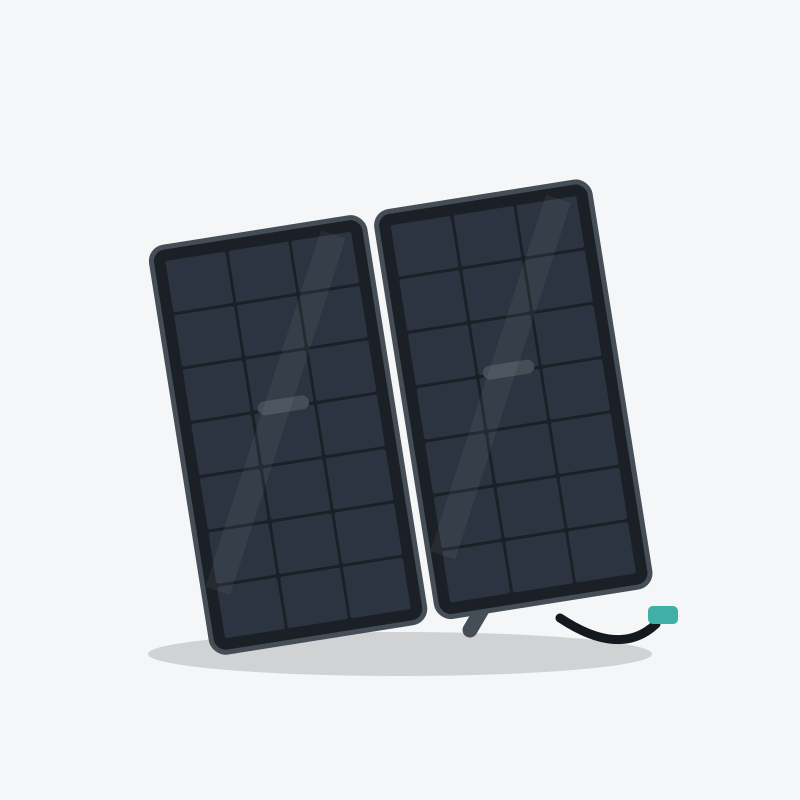
Bluetti
Bluetti PV200 200W Solar Panel
Specs unverifiedThe most watts per dollar in folding panels, with a case that feels like it'll outlast the warranty.
What's good
- Strong output for the money
- MC4 makes it universal across brands
- Durable long-fiber ETFE surface
What's annoying
- Four-fold design is awkward in wind
- No integrated USB output
- Kickstand angles are limited
Who this is wrong for
Quick grab-and-go trips. Unfolding four panels in wind is a two-person job.
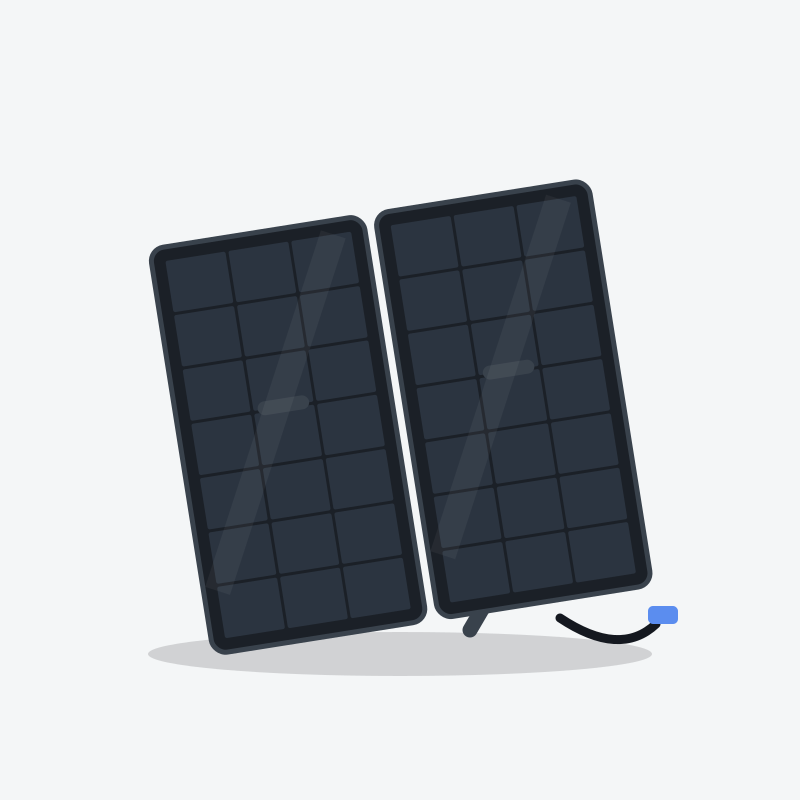
Anker
Anker SOLIX PS200 200W Solar Panel
Specs unverifiedThe panel that tells you when it's aimed right, which sounds trivial until you've guessed for an hour.
What's good
- Built-in sundial style angle guide removes the guesswork
- IP67 rating handles serious weather
- Sturdy hinges that don't feel like they'll crack in year two
What's annoying
- Heavier than rivals at the same wattage
- Costs more than the Bluetti equivalent
- Kickstand can slip on smooth concrete
Who this is wrong for
Bargain hunters. Bluetti gives you the same watts for less.
Questions people actually ask
What is the difference between MPPT and PWM?
Is MPPT worth it over PWM?
Why is my 200W panel only producing 90 watts?
What matters more than the controller type?
Who wrote this
Dhruvil Domadiya
Founder and editor, GreenCommuteGuide
I started GreenCommuteGuide because backup power is sold with numbers that sound impressive and mean very little — watt-hours on the box, surge ratings that turn out to be a boost mode, charge times quoted to 80% and printed as though they were full. I set the rules this site runs on: every spec is checked against the manufacturer's own documentation, anything we have not verified is marked as unverified on the page rather than quietly published, prices are never shown because they go stale, and every review names at least one product not to buy and who it is wrong for. Where I have not tested something myself, the page says so.
- · Sets and enforces the editorial standards on this site — unverified claims are flagged on the page, and the build fails if they are not
- · Specs are taken from manufacturers' own published documentation, never from retailer listings, and the source and date are recorded for each product
- · No payment is accepted for a rating, a ranking, or a positive verdict
Read this next
- Battery & Tech BasicsWhy Won't My Power Station Charge from Solar?The panel is in full sun and the screen still says 0W. Nine causes, ordered by how often they turn out to be the one, starting with the voltage rule nobody mentions.
- Sizing & CalculatorsWiring Solar Panels in Series vs Parallel for a Power StationSeries raises voltage. Parallel raises current. Get it wrong in one direction and you charge slowly; get it wrong in the other and you destroy the charge controller.
- RV, Camping & Off-GridBest Solar Panels for Portable Power StationsThe rated watts on the box is not what you get. Here is what a panel really produces, how many you need, and when panels are a waste of money.
- Sizing & CalculatorsHow Long Will a Power Station Run a Chest Freezer?About 20 hours on a 1,000Wh unit — and if you play it right, one battery covers three or four days of freezer, not one.