Sizing & Calculators
Wiring Solar Panels in Series vs Parallel for a Power Station
Series raises voltage. Parallel raises current. Get it wrong in one direction and you charge slowly; get it wrong in the other and you destroy the charge controller.
We earn a commission on purchases made through links on this page, at no extra cost to you. How this works.
What's in this article
The two limits on your unit
Find these in the manual or on the input port label. They look like:
Solar input: 11–60V, 13A max, 500W max
Three numbers, and they mean three different things:
Voltage range (11–60V). Below the minimum, the charge controller does not start and you see 0W. Above the maximum, you risk destroying it. This is the hard limit.
Current limit (13A). Exceed it and the unit simply caps — no damage, just wasted panel. Annoying, not dangerous.
Power limit (500W). The most it will accept regardless of how you wire things.
So the asymmetry is: too much current is a waste, too much voltage is a repair bill. When in doubt, wire parallel.
How each wiring method works
Say you have two identical panels, each 100W, 20V open circuit, 5A.
Series (positive of one to negative of the next):
- Voltage: 20V + 20V = 40V
- Current: 5A
- Power: 200W
Parallel (all positives together, all negatives together, using a branch connector):
- Voltage: 20V
- Current: 5A + 5A = 10A
- Power: 200W
Same power either way. Different shape.
When to use series
When your unit needs a high starting voltage. Many power stations will not begin charging below 11–15V. One panel at 18V working voltage clears it in full sun, and falls below it under cloud — which is why you get 0W on an overcast day with a single panel. Two in series gives you headroom, and charging continues in poorer light.
When the cable run is long. Higher voltage means lower current for the same power, and lower current means less loss in the wire. For a panel array 50 feet from the unit, series is meaningfully better.
When you want to reach the unit's power limit. With a low current cap, series is often the only way to get there.
When to use parallel
When shading is a problem. This is the big one. In series, panels are like a chain — the weakest one limits the whole string. One shaded panel drags down the pair. In parallel, each panel contributes independently, so a shaded panel just contributes less.
If your panels sit where a tree, an RV vent or a chimney throws a moving shadow across them, wire parallel and accept the tradeoff.
When series would exceed the voltage limit. Three 24V panels in series is 72V open circuit, which is over the 60V ceiling in our example. That is a destroyed input.
When your panels are not identical. Mixed panels in series behave badly. Parallel is more forgiving, though still not ideal.
The calculation that protects your unit
Use open circuit voltage (Voc), not working voltage, and use it in the cold.
Voc is printed on the panel's back label and is higher than the working voltage. Critically, Voc rises as temperature falls — a panel rated 22V Voc can produce noticeably more on a bright freezing morning. That is when people blow charge controllers: sunny, cold, panels wired to the theoretical limit.
Rule of thumb: keep your total series Voc at or below about 80% of the unit's maximum input voltage. For a 60V input, stay under about 48V of combined Voc. That margin absorbs the cold-weather rise.
Series-parallel, for four or more panels
With four panels you can do both: two pairs wired in series, then those two strings wired in parallel. Voltage doubles, current doubles, and you get the benefits of both without pushing either limit.
This is the standard arrangement for larger portable arrays, and it is where an MC4 branch connector earns its keep.
The practical wiring notes
MC4 connectors are polarised and only fit one way. If it will not click, you have male-to-male or female-to-female. Do not force it.
Series is just cable to cable: connect panel A's positive to panel B's negative, then the two remaining ends go to the unit.
Parallel needs branch connectors — a Y-shaped adapter that combines two positives into one and two negatives into one. Buy the ones rated for your current.
Never connect or disconnect under full sun with a load running. Cover the panels or disconnect at the unit first. DC arcing damages connectors and pits the contacts.
Check polarity before plugging into the unit. A multimeter across the final leads takes ten seconds and tells you both voltage and polarity. Do this the first time you build any array.
If you are getting 0W
Nine times out of ten it is voltage below the minimum, a connector issue, or a panel in partial shade. We ordered the causes by frequency in Why Won't My Power Station Charge from Solar?
The short version
- Series adds voltage, parallel adds current. Same total power either way.
- Too much current is wasted. Too much voltage destroys the charge controller.
- Use series for long cable runs, weak light and reaching the power limit.
- Use parallel for shaded locations and mismatched panels.
- Calculate with open circuit voltage and keep the total under about 80% of your unit's maximum — Voc rises in the cold.
The picks, in detail
Specs come from data/products.json, so they're the same everywhere on this site.
Bluetti
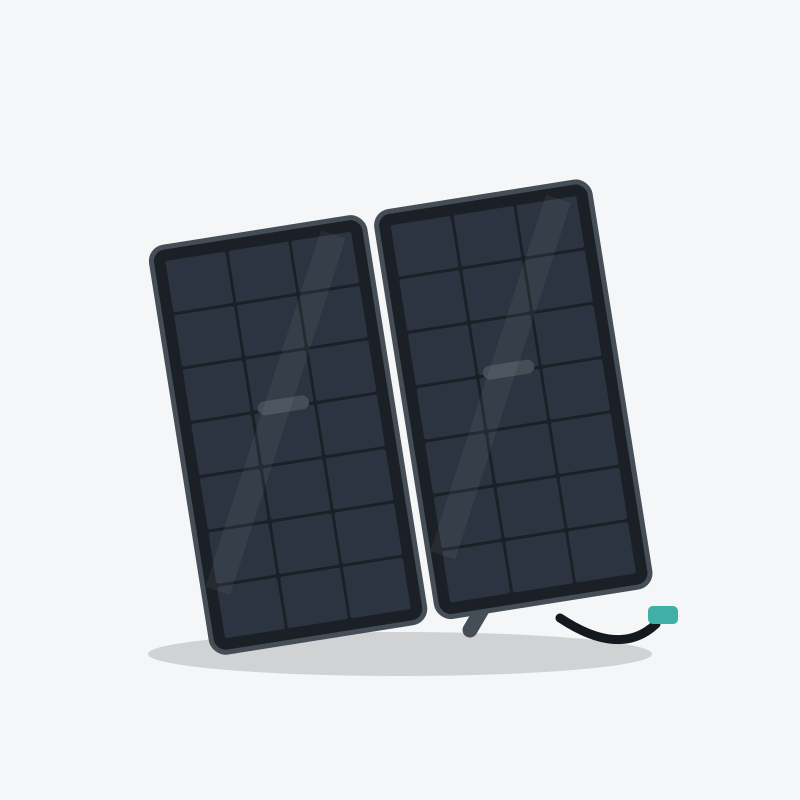
Bluetti PV200 200W Solar Panel
Specs unverifiedThe most watts per dollar in folding panels, with a case that feels like it'll outlast the warranty.
What's good
- Strong output for the money
- MC4 makes it universal across brands
- Durable long-fiber ETFE surface
What's annoying
- Four-fold design is awkward in wind
- No integrated USB output
- Kickstand angles are limited
Who this is wrong for
Quick grab-and-go trips. Unfolding four panels in wind is a two-person job.
Anker
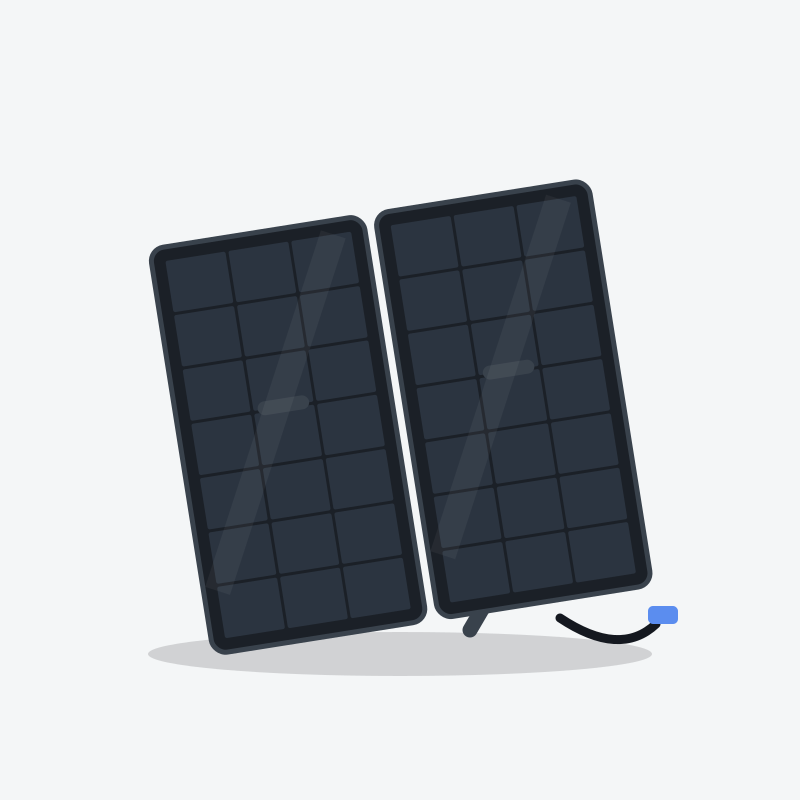
Anker SOLIX PS200 200W Solar Panel
Specs unverifiedThe panel that tells you when it's aimed right, which sounds trivial until you've guessed for an hour.
What's good
- Built-in sundial style angle guide removes the guesswork
- IP67 rating handles serious weather
- Sturdy hinges that don't feel like they'll crack in year two
What's annoying
- Heavier than rivals at the same wattage
- Costs more than the Bluetti equivalent
- Kickstand can slip on smooth concrete
Who this is wrong for
Bargain hunters. Bluetti gives you the same watts for less.
Jackery
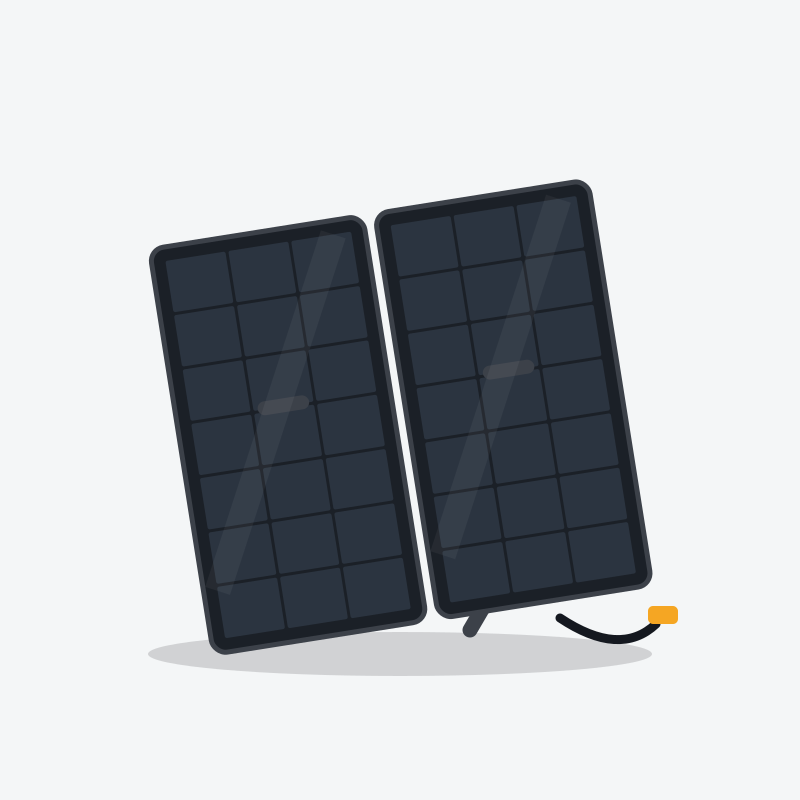
Jackery SolarSaga 100W Air
Specs unverifiedThe easy one. Unfold, prop, plug in, done. You pay for that simplicity.
What's good
- Genuinely idiot-proof setup
- Built-in USB ports so it charges a phone directly
- Light enough to move with the sun
What's annoying
- Proprietary connector limits you to Jackery without an adapter
- 100W is not enough panel for a 1kWh station
- IP65 means splash-resistant, not leave-it-in-a-storm
Who this is wrong for
Anyone trying to recharge a 2kWh unit. One of these will take days.
Questions people actually ask
Should I wire solar panels in series or parallel?
What happens if I exceed my power stations solar input voltage?
Why is my solar panel producing 0 watts?
Can I mix series and parallel with four panels?
Who wrote this
Dhruvil Domadiya
Founder and editor, GreenCommuteGuide
I started GreenCommuteGuide because backup power is sold with numbers that sound impressive and mean very little — watt-hours on the box, surge ratings that turn out to be a boost mode, charge times quoted to 80% and printed as though they were full. I set the rules this site runs on: every spec is checked against the manufacturer's own documentation, anything we have not verified is marked as unverified on the page rather than quietly published, prices are never shown because they go stale, and every review names at least one product not to buy and who it is wrong for. Where I have not tested something myself, the page says so.
- · Sets and enforces the editorial standards on this site — unverified claims are flagged on the page, and the build fails if they are not
- · Specs are taken from manufacturers' own published documentation, never from retailer listings, and the source and date are recorded for each product
- · No payment is accepted for a rating, a ranking, or a positive verdict
Read this next
- RV, Camping & Off-GridBest Solar Panels for Portable Power StationsThe rated watts on the box is not what you get. Here is what a panel really produces, how many you need, and when panels are a waste of money.
- Battery & Tech BasicsWhy Won't My Power Station Charge from Solar?The panel is in full sun and the screen still says 0W. Nine causes, ordered by how often they turn out to be the one, starting with the voltage rule nobody mentions.
- Sizing & CalculatorsMPPT vs PWM: Why Your Panel Says 200W and You're Getting 90MPPT converts extra voltage into extra current. PWM throws it away. That difference is 20–30% of your charging speed, and it is already decided by the unit you bought.
- Sizing & CalculatorsHow Long Will a Power Station Run a Chest Freezer?About 20 hours on a 1,000Wh unit — and if you play it right, one battery covers three or four days of freezer, not one.