RV, Camping & Off-Grid
Best Solar Panels for Portable Power Stations
The rated watts on the box is not what you get. Here is what a panel really produces, how many you need, and when panels are a waste of money.
We earn a commission on purchases made through links on this page, at no extra cost to you. How this works.
What's in this article
Day three. The battery is at eleven percent and the sky is finally clear.
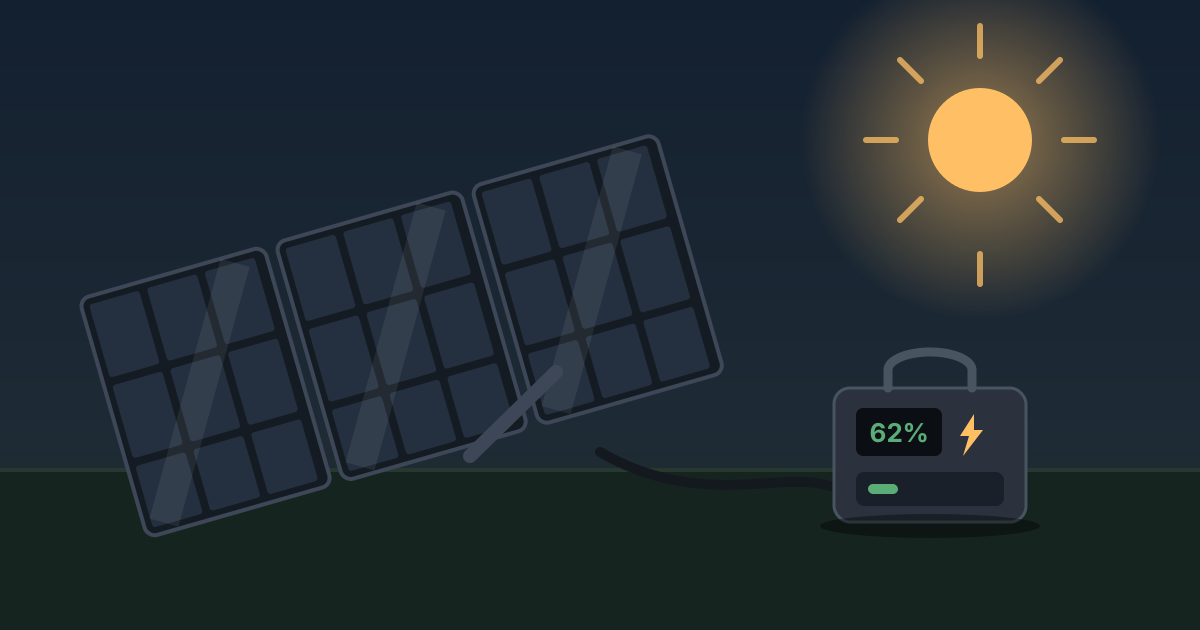
You unfold the panel, prop it up, and watch the screen say 96 watts. It's a 200-watt panel.
Nothing is broken. That's just what solar panels do, and almost nobody tells you before you buy one.
The number on the box is a lab number
Rated wattage is measured under Standard Test Conditions: perfect perpendicular light, 25°C cell temperature, clean glass. verify
Your driveway is not a lab. In practice a 200W panel gives you something like 120 to 160 watts at midday, and considerably less either side of it. verify
So how many do you need?
Work backwards from your battery.
1,000Wh station: two 200W panels refills it over a good day. One 100W panel will take days and is not a plan.
2,000Wh station: three or four 200W panels, and you'll still be watching the weather.
4,000Wh station: you're into permanently mounted arrays, not folding panels on a lawn.
The mistake people make is buying one panel to match one battery. Panels are the slow part of the system. You almost always want more panel than feels reasonable.
Will this panel work with my power station?
This is the question that actually stops people, and most panel reviews skip it entirely. Three things have to line up, and only one of them is on the box.
1. The connector. MC4 is the closest thing to a standard. Most stations accept MC4 into an XT60 or a barrel jack via an included cable.
2. The voltage window. Every station has a minimum and maximum solar input voltage, printed near the port — something like 11–60V. Under the minimum and it will not start charging at all. Over the maximum and the controller refuses, or worse.
3. The current limit. Usually 10–15A. Wiring panels in parallel raises current; series raises voltage. Which one you need depends on where you are in the window.
| Brand | Panel connector | Station input | Cross-brand notes |
|---|---|---|---|
| EcoFlow | MC4 | XT60 | MC4→XT60 cable included. Accepts third-party MC4 panels readily. |
| Bluetti | MC4 | Aviation / MC4 depending on model | Among the most open. PV200 works across brands. |
| Anker SOLIX | MC4 | XT60 | Straightforward with third-party MC4 panels. |
| Jackery | Proprietary DC on several SolarSaga models | DC8020 / proprietary | The awkward one. Some SolarSaga panels do not present bare MC4 and need an adapter to feed a non-Jackery station. |
verify on the specific connector types per model — these change between product generations, and the only authoritative source is the manual for your exact unit.
What the specs actually mean
Four numbers appear on every panel listing. Two matter and two mostly do not.
Rated watts — matters, but not the way you think. It is a lab ceiling. Multiply by about 0.7 for a realistic midday figure.
Efficiency (typically 22–25%) — matters less than the marketing implies. It describes how much of the light hitting the panel becomes electricity, which mostly determines how physically large a 200W panel is. A 23% panel and a 21% panel both rated 200W produce about the same power; the 23% one is a bit smaller. Buy for watts and size, not for the efficiency percentage.
IP rating — matters if it lives outside. IP65 handles rain. IP67 and IP68 handle heavier weather and brief submersion. Note that on almost every folding panel, the junction box and connectors are the weak point rather than the glass, and a high IP rating on the panel does not always cover the cable ends.
Open-circuit voltage (Voc) — matters, and nobody reads it. This is the number you use to check against your station's maximum input. Critically, Voc rises as temperature falls, so a string that sits just under the ceiling on a warm afternoon can exceed it on a cold clear morning. Leave headroom.
Seasonal reality
Panel output is not a flat number across the year, and the gap is much larger than most people expect.
| Conditions | Realistic output from a 200W panel |
|---|---|
| Clear summer midday, well aimed | 130–160W |
| Clear summer, panel flat on the ground | 70–100W |
| Clear winter midday, low sun angle | 60–90W |
| Overcast | 20–50W |
| Heavy cloud or rain | 10–30W |
verify on every figure in this table.
Look at the winter row against the overcast row. This is the uncomfortable part: panels are weakest in exactly the season when outages last longest. A December ice storm gives you short days, a low sun angle and often snow on the glass.
If your outage risk is mainly winter, be honest that panels are a partial answer at best. More battery, or a car adapter, does more for you than another panel.
What we'd actually buy
Best value: Bluetti PV200
The most watts per dollar in folding panels, with MC4 connectors so it works across brands rather than locking you to one.
The long-fiber ETFE surface feels like it'll outlast the warranty, which is not true of every panel at this price.
Who it's wrong for: anyone doing quick grab-and-go trips. It's a four-fold design and unfolding it in wind is genuinely a two-person job.
Easiest to aim: Anker SOLIX PS200
It has a built-in angle guide — a little sundial arrangement that tells you when you're pointed right.
That sounds like a gimmick until you've spent an hour nudging a panel around guessing. Aim matters more than almost any spec: a badly angled 200W panel underperforms a well-aimed 100W one.
IP67 too, so it survives weather that would worry other panels.
Who it's wrong for: bargain hunters. Bluetti gives you the same watts for less, and it's heavier than rivals at the same rating.
The light one: Jackery SolarSaga 100W Air
Unfold, prop, plug in, done. If you want zero thinking, this is it, and there's nothing wrong with paying for that.
The Air is the notably light option in this group — Jackery lists it at around 7 lb against roughly double that for some 100W rivals. verify If the panel has to go in a backpack rather than a car boot, that gap is the whole decision.
It is also bifacial, picking up light reflected off the ground, which is a genuine gain on snow, gravel or a pale driveway and close to nothing on grass.
Who it's wrong for: anyone trying to refill a 1kWh station. 100W will take days, and no amount of good design changes that. It also uses a DC8020 connector rather than bare MC4, so feeding a non-Jackery station needs an adapter — see the compatibility table above.
The thing that matters more than the panel
Angle.
A panel flat on the ground can lose a huge share of its output compared with one aimed square at the sun. Moving it three times a day beats buying a bigger panel.
Rough rule: tilt it up so it faces the sun straight on, and reposition mid-morning, midday and mid-afternoon. It's tedious. It's also free, and it's the single biggest gain available to you.
Shade is the other one. A single shaded cell can drag down the whole panel, not just its own share. A tree branch across one corner costs you far more than it looks like it should.
When panels are a waste of money
Be honest with yourself about your outages.
Under 24 hours? Charge from the wall before the storm and skip panels entirely. They add nothing to a one-night event, and the money is better spent on more battery.
Winter in the north? Short days, low sun angle, snow on the glass. Panels are dramatically worse than the brochure suggests in December, which is exactly when ice storms take your power out.
Apartment with no outdoor space? Nowhere to put them.
For those situations a 12V car charging adapter is unglamorous and better. Your car is outside with a full tank, and idling it for half an hour puts a real dent in the problem.
How to test a panel before you need it
Do this on a sunny weekend, not on day three of an outage.
- Set it up in full sun, aimed square at it. Note the wattage on the station display.
- Deliberately shade one corner with your hand and watch the number. On most panels it collapses far more than the shaded fraction. Now you know what a branch costs you.
- Lay it flat on the ground and note the figure again. The difference between that and step 1 is what aiming is worth — usually more than a second panel.
- Time a real charge. Run the station down to 50%, then see how much a full afternoon actually puts back.
That last number is the only one worth planning around, and it will not match anything on the box.
Common mistakes
Buying one panel because you have one battery. Panels are the bottleneck. Two 200W panels and a 1kWh station is a sensible pairing; one 100W panel and the same station is not a recharging plan.
Leaving it flat all day. A flat panel on grass gives up a large share of its output. Three repositions a day beats buying another panel, and costs nothing.
Assuming waterproof means leave-it-out. IP ratings cover rain, not months of UV, and not the connectors lying in a puddle. Bring folding panels in.
Buying a rigid roof panel for a portable station. Rigid panels are cheaper per watt and make sense mounted on an RV or a shed. They are the wrong shape for a battery you carry.
Ignoring the voltage window. The most common cause of "my panel does not work" is a perfectly good panel outside the station's input range.
Straight answer
Two 200W MC4 panels. That's the setup that covers most people, works with most stations, and doesn't lock you to one brand.
MC4 specifically, because it keeps you free to change station brand later without replacing the panels — and panels outlive stations.
Buy them only if your outages run past a day. Below that, buy more battery instead — and put the panel money toward something you'll actually use.
If you have not chosen the station yet, do that first: work out the size you need, then pick panels to match its input window. Doing it the other way round is how people end up with an array their controller will not start.
The picks, in detail
Specs come from data/products.json, so they're the same everywhere on this site.
Bluetti
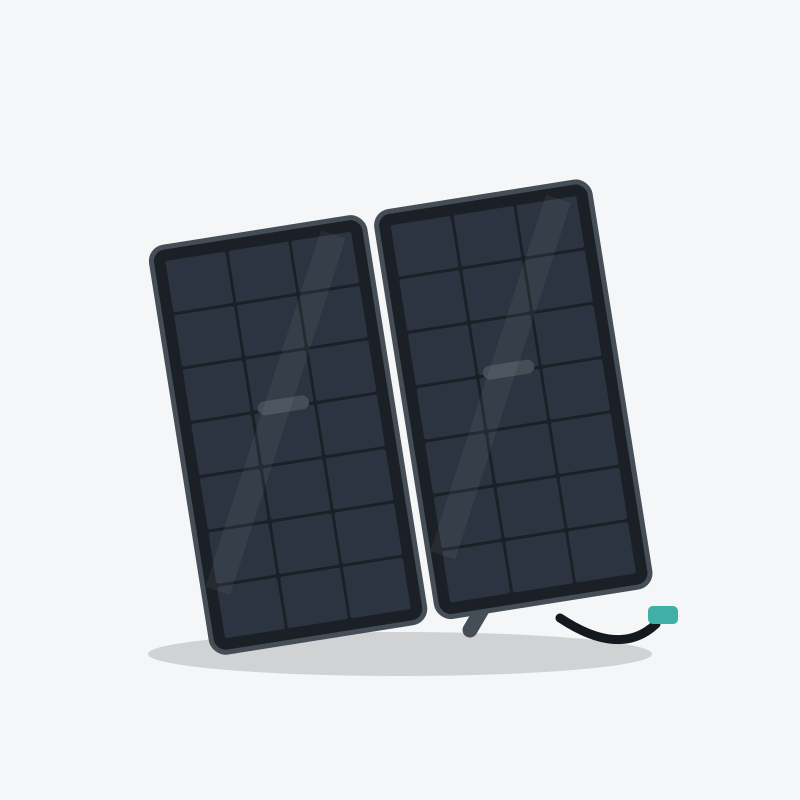
Bluetti PV200 200W Solar Panel
Specs unverifiedThe most watts per dollar in folding panels, with a case that feels like it'll outlast the warranty.
What's good
- Strong output for the money
- MC4 makes it universal across brands
- Durable long-fiber ETFE surface
What's annoying
- Four-fold design is awkward in wind
- No integrated USB output
- Kickstand angles are limited
Who this is wrong for
Quick grab-and-go trips. Unfolding four panels in wind is a two-person job.
Anker
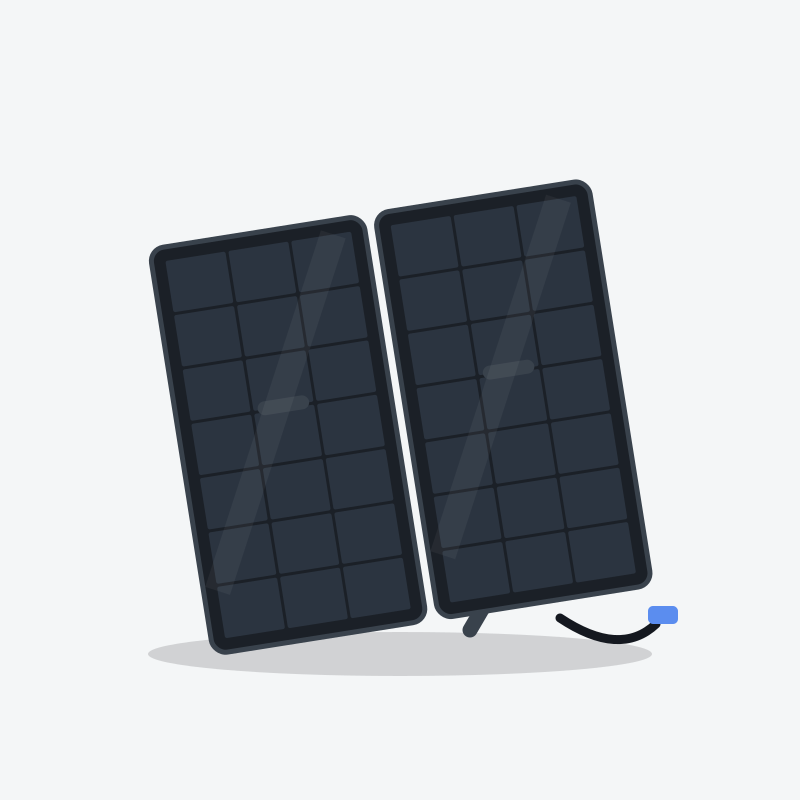
Anker SOLIX PS200 200W Solar Panel
Specs unverifiedThe panel that tells you when it's aimed right, which sounds trivial until you've guessed for an hour.
What's good
- Built-in sundial style angle guide removes the guesswork
- IP67 rating handles serious weather
- Sturdy hinges that don't feel like they'll crack in year two
What's annoying
- Heavier than rivals at the same wattage
- Costs more than the Bluetti equivalent
- Kickstand can slip on smooth concrete
Who this is wrong for
Bargain hunters. Bluetti gives you the same watts for less.
Jackery
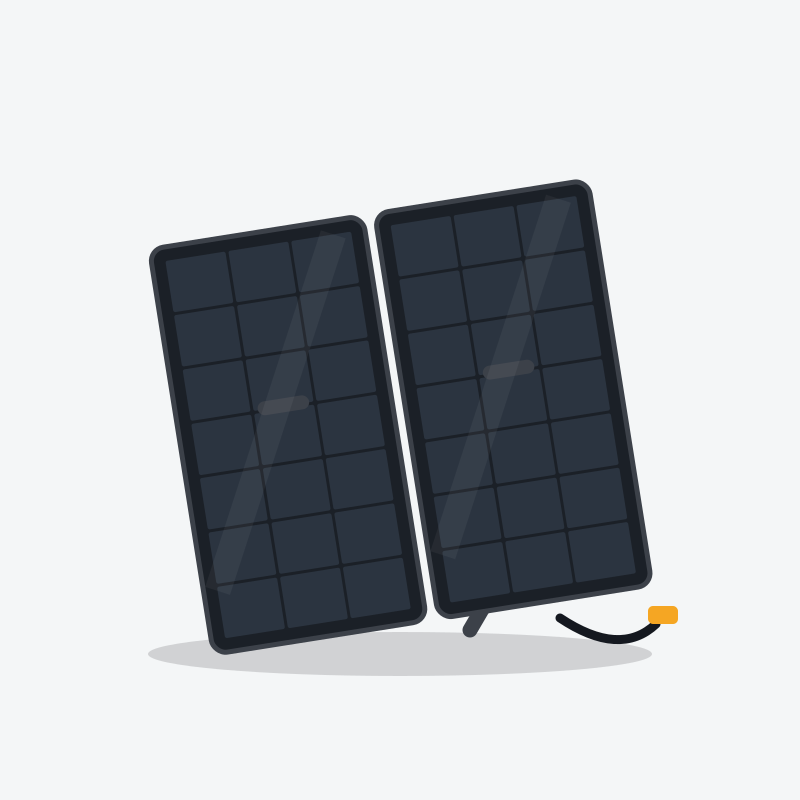
Jackery SolarSaga 100W Air
Specs unverifiedThe easy one. Unfold, prop, plug in, done. You pay for that simplicity.
What's good
- Genuinely idiot-proof setup
- Built-in USB ports so it charges a phone directly
- Light enough to move with the sun
What's annoying
- Proprietary connector limits you to Jackery without an adapter
- 100W is not enough panel for a 1kWh station
- IP65 means splash-resistant, not leave-it-in-a-storm
Who this is wrong for
Anyone trying to recharge a 2kWh unit. One of these will take days.
Questions people actually ask
How much power does a 200W solar panel actually produce?
How many solar panels do I need to charge a 1000Wh power station?
Can I mix solar panel brands?
Do solar panels work on cloudy days?
Are solar panels worth it for home backup?
Who wrote this
Dhruvil Domadiya
Founder and editor, GreenCommuteGuide
I started GreenCommuteGuide because backup power is sold with numbers that sound impressive and mean very little — watt-hours on the box, surge ratings that turn out to be a boost mode, charge times quoted to 80% and printed as though they were full. I set the rules this site runs on: every spec is checked against the manufacturer's own documentation, anything we have not verified is marked as unverified on the page rather than quietly published, prices are never shown because they go stale, and every review names at least one product not to buy and who it is wrong for. Where I have not tested something myself, the page says so.
- · Sets and enforces the editorial standards on this site — unverified claims are flagged on the page, and the build fails if they are not
- · Specs are taken from manufacturers' own published documentation, never from retailer listings, and the source and date are recorded for each product
- · No payment is accepted for a rating, a ranking, or a positive verdict
Read this next
- RV, Camping & Off-GridBest Portable Power Station for CampingThe one you carry beats the one with better specs. Here is what size actually makes sense for a weekend, and what most people over-buy.
- Battery & Tech BasicsWhy Won't My Power Station Charge from Solar?The panel is in full sun and the screen still says 0W. Nine causes, ordered by how often they turn out to be the one, starting with the voltage rule nobody mentions.
- Home Outage & BackupHurricane Prep Checklist: The Power Backup EditionEverything to do before the storm, in the order that matters. Written for the week you actually have, not the year you should have had.
- Sizing & CalculatorsWhat Size Solar Generator Do I Need? (Free Calculator)Skip the guesswork. Tick the things you need to keep running, get a real watt-hour number, and see which units can actually do it.