Run This Appliance
Garage Door Won't Open in a Power Outage? Don't Buy Anything Yet
There is a red cord hanging from the rail above your car. Pull it and the door opens by hand. That is the entire fix, and it costs nothing.
We earn a commission on purchases made through links on this page, at no extra cost to you. How this works.

What's in this article
Why the red cord exists
Every automatic garage door opener sold in the United States has a manual release, because building codes require a way out when the power fails. The cord disengages the trolley from the chain or belt, leaving the door free-floating on its springs.
A properly balanced door weighs almost nothing to lift by hand — the torsion springs above the opening carry the weight, not the motor. If yours is hard to lift, the springs need adjusting, and that is a repair worth making regardless of outages.
To re-engage afterwards, pull the cord back toward the door (or push the lever back, depending on the model), then run the opener once. It clicks back onto the trolley on the next cycle.
The part that actually catches people
If your garage door is the only way out, and the door is locked from outside, the release does not help you — because you cannot reach it from the driveway.
This is the real problem, and there are three real fixes:
Fit an emergency release kit. A cable through the top of the door with a keyed lock on the outside, which lets you trip the release from the driveway. Under $30, ten minutes to install, and it solves the actual problem.
Use the side door. Most attached garages have one. If yours is blocked by a chest freezer and four bicycles, unblock it. That is free.
Park outside when a storm is forecast. The oldest trick in the book, and the one everybody remembers only after the fact.
What if you want the opener working anyway
If your real complaint is convenience — you want the button to work when the power is out — you have two options, and one of them is clearly better.
A battery backup garage door opener. Some manufacturers sell openers with an integrated battery, and in some states this is now required on new installations. It gives you a limited number of cycles per charge, it is automatic, and it costs a few hundred dollars installed. If your opener is old and due for replacement anyway, buy this version.
A power station. Yes, it works. The opener draws roughly 500–750 watts while the door is moving, with a surge often above 1,200 watts, and it only runs for a few seconds per cycle. Energy use is trivial — a 500Wh unit would open the door hundreds of times.
But the opener is usually plugged into a ceiling outlet, which means dragging the battery out and standing on a ladder to reach the plug. In a hurricane. In the dark. To do something the red cord does in two seconds.
Do not buy a power station for this reason alone. Buy one because of the fridge, the furnace or the CPAP, and enjoy the garage door as a bonus.
Things worth checking today
While you are out there, three things that cost nothing:
Test the release now. Pull the cord, lift the door, put it back. Find out today whether it is seized, painted over, or missing, rather than during a storm.
Check the balance. With the door disconnected, raise it halfway and let go. A balanced door stays put. One that slams down or shoots up has spring problems and is genuinely dangerous — call a technician, and do not adjust torsion springs yourself.
Know where the outside release is, if you have one, and make sure the key is somewhere other than inside the garage.
The honest summary
The internet is full of articles about running a garage door opener on backup power, mostly written by people selling backup power. The mechanism was designed from the start to work without electricity, and the manufacturers built the solution into every unit.
Pull the cord.
The short version
- Every US garage door opener has a manual release — the red cord on the ceiling rail.
- A balanced door lifts by hand with almost no effort. If yours does not, the springs need service.
- The real problem is being locked outside: fit a $30 external release kit, or keep the side door clear.
- An opener draws 500–750W for a few seconds. A power station runs it easily, but the ceiling outlet makes it impractical.
- Buy backup power for the fridge and the heat. Not for this.
The picks, in detail
Specs come from data/products.json, so they're the same everywhere on this site.
Anker
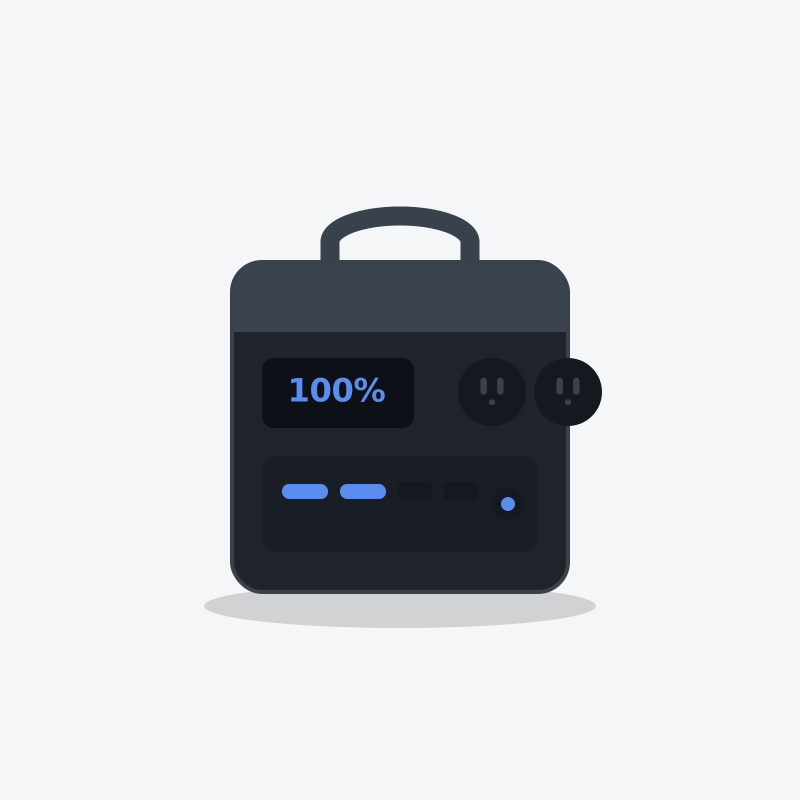
Anker SOLIX C300
The one you actually carry. Small, quiet, and built better than anything else this size.
- Capacity
- 288 Wh
- AC output
- 300W
- Weight
- 9.1 lb
What's good
- Built-in light that is actually useful, not a gimmick
- Three USB-C ports, one of them high wattage for laptops
- Charges from empty in about an hour
What's annoying
- 300W ceiling — this powers electronics, not appliances
- Small capacity disappears fast if you plug in anything with a motor
- Priced close to units with three times the capacity on sale
Who this is wrong for
Home backup. If your outage plan is a 288Wh box, you don't have an outage plan.
Questions people actually ask
How do I open my garage door during a power outage?
What is the red cord on my garage door?
Should I buy a power station just for my garage door?
How do I reconnect the opener after the power comes back?
Who wrote this
Dhruvil Domadiya
Founder and editor, GreenCommuteGuide
I started GreenCommuteGuide because backup power is sold with numbers that sound impressive and mean very little — watt-hours on the box, surge ratings that turn out to be a boost mode, charge times quoted to 80% and printed as though they were full. I set the rules this site runs on: every spec is checked against the manufacturer's own documentation, anything we have not verified is marked as unverified on the page rather than quietly published, prices are never shown because they go stale, and every review names at least one product not to buy and who it is wrong for. Where I have not tested something myself, the page says so.
- · Sets and enforces the editorial standards on this site — unverified claims are flagged on the page, and the build fails if they are not
- · Specs are taken from manufacturers' own published documentation, never from retailer listings, and the source and date are recorded for each product
- · No payment is accepted for a rating, a ranking, or a positive verdict
Read this next
- Battery & Tech Basics9 Things a Solar Generator Will NOT RunEvery product page tells you what these can power. Nobody tells you what they can't. Here is the honest list, with the numbers.
- Home Outage & BackupHurricane Prep Checklist: The Power Backup EditionEverything to do before the storm, in the order that matters. Written for the week you actually have, not the year you should have had.
- Home Outage & BackupRun a Blackout Drill: Test Your Backup Before You Need ItTwo hours on a Saturday tells you more than any review. Kill the main breaker, start the clock, and find out what you actually own.
- Run This ApplianceKeeping Insulin and Medication Cold in a Power OutageThe first thing to know is that most insulin does not need a fridge as urgently as people think. The second is what to do about the insulin that does.