Home Outage & Backup
Do You Need a Transfer Switch for a Solar Generator?
Extension cords work fine for most people. Here is exactly when they stop working, what a transfer switch costs, and the shortcut that kills lineworkers.
We earn a commission on purchases made through links on this page, at no extra cost to you. How this works.

What's in this article
You ran an extension cord from the battery to the fridge, and another to the lamp. It worked. You felt clever.
Then you realized the furnace has no plug. And neither does the well pump.
That's the whole question, and for most people the answer is simpler and cheaper than the internet suggests.
The one test that decides it
Does the thing you need have a plug?
If everything on your list plugs into a wall — fridge, lamps, router, phone chargers, a fan, a TV — then you don't need a transfer switch. Extension cords are fine. Buy a battery and stop reading.
If your list includes things wired straight into your panel, extension cords cannot reach them. That's the line.
Hardwired, no plug:
- Furnace blower
- Well pump
- Sump pump (sometimes)
- Electric water heater
- Central air
- Some garbage disposals and range hoods
The thing you must never do
What a transfer switch actually is
A box beside your panel with a handful of circuits wired into it. During an outage you flip it from GRID to GENERATOR and those circuits draw from your battery instead.
It's a physical interlock — it makes it impossible for your house to be connected to both at once. That's the safety function, and it's why the wiring has to be done properly.
You pick which circuits go on it. Typically the furnace, the fridge circuit, some lights, and maybe the well.
The cheaper cousin: an interlock kit
A metal plate that mounts on your panel and physically stops the main breaker and the generator breaker being on together.
Same safety outcome, usually less money, and it gives you access to more circuits. Not every panel supports one — an electrician will know in about a minute.
When it's worth it
You need all three of these to be true:
- Something you genuinely need is hardwired
- Your battery can actually carry it — 240V and 4,000Wh-class for a well pump
- Your outages are long enough that dragging cords around stops being acceptable
Miss any one and you're paying for an install that doesn't solve your problem.
Swipe the table sideways to see every column.
| Price | |||||||
|---|---|---|---|---|---|---|---|
| EcoFlowEcoFlow DELTA Pro 3LiFePO4 · expandable | 4,096 Wh | 4,000W | 6,000W | 113 lb | — | 5 yr | Check price for EcoFlow DELTA Pro 3 (opens in a new tab, affiliate link) |
| AnkerAnker SOLIX F3800LiFePO4 · expandable | 3,840 Wh | 6,000W | 9,000W | 132.3 lb | — | 5 yr | Check price for Anker SOLIX F3800 (opens in a new tab, affiliate link) |
| EcoFlowEcoFlow DELTA 2LiFePO4 · expandable | 1,024 Wh | 1,800W | 2,700W | 27 lb | 1h 20m | 5 yr | Check price for EcoFlow DELTA 2 (opens in a new tab, affiliate link) |
Specs come from data/products.json. Capacity is the figure on the box — real usable output is roughly 85% of it once you account for inverter losses.
The DELTA 2 is an excellent unit and wiring it to a transfer switch would be a waste — 1,800W and 120V doesn't reach the loads that need one.
The cost conversation nobody has
Get local quotes. Prices vary enormously by region, by panel, and by how much work your particular house needs, so any number in an article is guesswork.
But run the whole sum before you commit:
Battery + transfer switch + electrician = ?
Then get a quote for a permanently installed standby generator and compare honestly.
At the point where you're paying an electrician anyway, standby generators become genuinely competitive. They run on natural gas or propane, they start themselves, and they don't run out on day three.
They're also loud, they need maintenance, and they can't run indoors. It's a real trade, not a foregone conclusion — but you should make it with both numbers in front of you.
The middle path most people miss
You don't have to choose between "extension cords" and "full home integration."
A single dedicated circuit for the furnace blower, with an interlock, is often the whole answer — especially in gas-heat country. The blower is a modest load, and running it heats your entire house rather than one room.
That's a much smaller job than backing up the whole panel, and it delivers most of the benefit.
Straight answer
Everything has a plug? Extension cords. Don't spend the money.
Gas heat and cold winters? One circuit for the furnace blower, with an interlock. Best return on investment in this whole category.
Well pump, rural, long outages? Full transfer switch and a 240V system — and price a standby generator at the same time.
And whatever you do, get a licensed electrician. This is the one part of backup power where a mistake doesn't just cost money.
The picks, in detail
Specs come from data/products.json, so they're the same everywhere on this site.
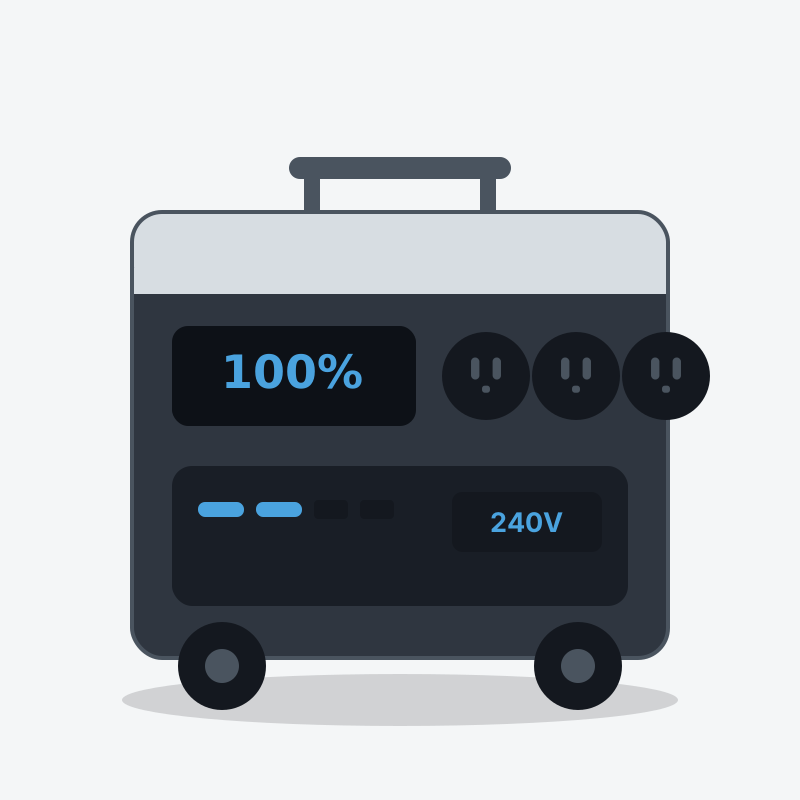
EcoFlow
EcoFlow DELTA Pro 3
Specs unverifiedThe first portable unit that can honestly claim to back up parts of a house, including 240V circuits.
- Capacity
- 4,096 Wh
- AC output
- 4,000W
- Weight
- 113 lb
What's good
- 240V output covers well pumps and some dryers, which almost nothing else portable does
- Pairs with a transfer switch so you stop running extension cords through a window
- Chains with extra batteries into genuinely serious capacity
What's annoying
- Costs about the same as a permanently installed standby generator once you add a transfer switch
- 113 lb means it lives where you put it
- The install to make it useful is an electrician job, not a weekend project
Who this is wrong for
Anyone who wants to move it more than once. It has wheels for a reason, and stairs will beat you.
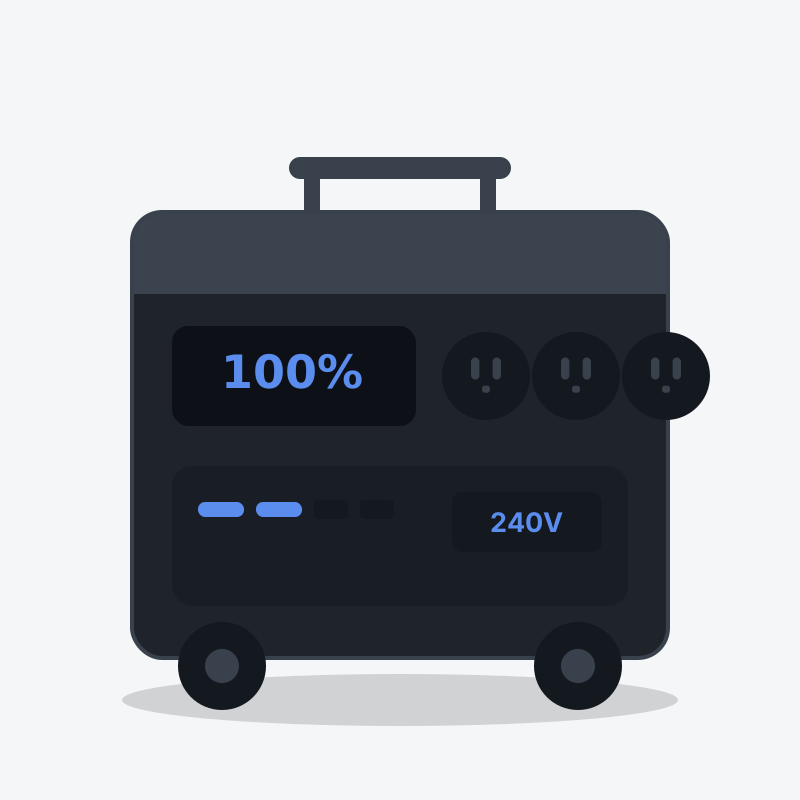
Anker
Anker SOLIX F3800
A home backup system wearing a portable power station's clothes. Treat it as an install, not a purchase.
- Capacity
- 3,840 Wh
- AC output
- 6,000W
- Weight
- 132.3 lb
What's good
- 6000W output covers nearly anything in a normal house, one at a time
- Real 240V, so the well pump and the dryer are on the table
- Stacks with expansion batteries into a very large bank
What's annoying
- 132 lb, and it needs a permanent home
- The transfer switch and electrician push the real cost well past the sticker
- At this price a standby generator deserves a serious look
Who this is wrong for
Renters. You cannot get the value out of it without wiring work you don't own.
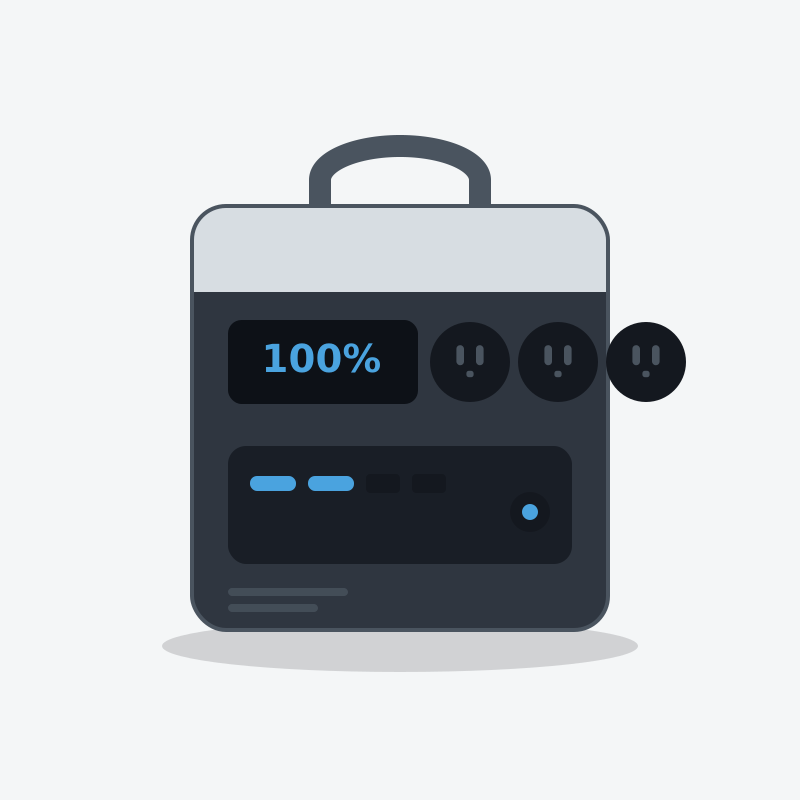
EcoFlow
EcoFlow DELTA 2
The one most people should buy. It refills fast enough that a short sunny break between storm bands actually matters.
- Capacity
- 1,024 Wh
- AC output
- 1,800W
- Weight
- 27 lb
What's good
- Wall recharge is genuinely quick — useful when power flickers back for an hour
- LiFePO4 cells, so it tolerates being left plugged in for years
- Six AC outlets means no daisy-chained power strips on the kitchen counter
- Add an extra battery later instead of buying a whole second unit
What's annoying
- The fan is audible in a quiet bedroom at night
- 1800W ceiling rules out most space heaters and hair dryers
- Expansion batteries cost nearly as much as the unit itself
Who this is wrong for
Anyone who needs to power a well pump, an electric water heater or a central AC. It will not start them, and it is not a whole-home unit.
Questions people actually ask
Do I need a transfer switch for a portable power station?
How much does a transfer switch cost to install?
What is an interlock kit?
Can I just plug my generator into a wall outlet?
Can I install a transfer switch myself?
Who wrote this
Dhruvil Domadiya
Founder and editor, GreenCommuteGuide
I started GreenCommuteGuide because backup power is sold with numbers that sound impressive and mean very little — watt-hours on the box, surge ratings that turn out to be a boost mode, charge times quoted to 80% and printed as though they were full. I set the rules this site runs on: every spec is checked against the manufacturer's own documentation, anything we have not verified is marked as unverified on the page rather than quietly published, prices are never shown because they go stale, and every review names at least one product not to buy and who it is wrong for. Where I have not tested something myself, the page says so.
- · Sets and enforces the editorial standards on this site — unverified claims are flagged on the page, and the build fails if they are not
- · Specs are taken from manufacturers' own published documentation, never from retailer listings, and the source and date are recorded for each product
- · No payment is accepted for a rating, a ranking, or a positive verdict
Read this next
- Run This ApplianceCan You Run a Well Pump on a Solar Generator?Mostly no, and the reason is one number nobody checks. Here is what it actually takes, and the cheaper trick that saves most people.
- Home Outage & BackupBest Solar Generators for Power Outages in 2026Which battery actually gets your family through the night, which one is a waste of money, and how to tell the difference before you spend.
- Your State's GridBackup Power for Texas Outages: What Actually Works HereERCOT is its own grid with its own failure modes, and Texas outages hit in heat as often as ice. Here is what to buy for both.
- Home Outage & BackupSolar Generator vs Gas Generator: The Honest ComparisonGas wins on raw power and price. Battery wins on everything else. Here is exactly where each one falls apart, including the part that kills people.