RV, Camping & Off-Grid
Best Portable Power Station for Camping
The one you carry beats the one with better specs. Here is what size actually makes sense for a weekend, and what most people over-buy.
We earn a commission on purchases made through links on this page, at no extra cost to you. How this works.

What's in this article
You carried it from the car to the site once. It was ninety feet and you were annoyed by the end of it.
That's the thing nobody puts in a camping power station review. The best unit isn't the one with the most watt-hours. It's the one that doesn't make you resent bringing it.
Short answer
In a hurry? Find your row and go. The details are below if you want them.
Best Overall
Most people, most outages
Anker SOLIX C300
288 Wh · 300W · 9.1 lb
Best Budget
Phones and a CPAP, nothing more
Anker SOLIX C300
288 Wh · 300W · 9.1 lb
Best for RV
Fits the bay, survives the road
Anker SOLIX C1000
1,056 Wh · 1,800W · 28.44 lb
Best Whole-Home
Well pump, furnace, 240V circuits
EcoFlow DELTA Pro 3
4,096 Wh · 4,000W · 113 lb
Specs unverified
What a weekend actually uses
Let's be honest about the load.
Two phones charging. A string of lights. A camera battery or two. Maybe a small speaker, maybe a laptop if you're the kind of person who brings one.
That's about 200 watt-hours over three days. verify
Two hundred. Not two thousand.
Where that changes
Three things move you up a size, and only three.
A 12V camping fridge. Around 45 watts, cycling, so maybe 400Wh a day. verify Now you want 500Wh minimum and probably more.
A CPAP. About 300Wh a night with the humidifier off. Two nights and you need 600Wh-plus.
Anything with a heating element. Kettle, coffee maker, hair dryer. These are battery-killers and they belong on your camp stove instead.
If none of those apply, stay small. Genuinely.
What we'd actually buy
The one to carry: Anker SOLIX C300
288Wh, about nine pounds, and better built than anything else this size. verify
The built-in light isn't a gimmick — it's genuinely useful at a campsite, and it means one less thing in the bag. Three USB-C ports, one of them high-wattage, covers a modern kit without adapters.
Anker publishes 50 minutes to 80% from a wall outlet. They don't publish a full-charge figure, so don't plan around one — but 80% over a diner lunch is genuinely useful.
Who it's wrong for: anyone bringing a fridge or a CPAP. 300W output and 288Wh runs out of both headroom and capacity. And it's a bad home backup unit — if that's your real goal, buy for that instead.
The friendly one: Jackery Explorer 300 Plus
Under nine pounds, honest about what it is, and the interface explains itself with no manual and no app.
If you're buying this for someone who doesn't enjoy figuring out devices, this is the pick.
Who it's wrong for: anyone who needs more than one AC outlet. There's exactly one, and at a campsite with four people that becomes a negotiation.
If you're bringing a fridge: Jackery Explorer 1000 v2
Now the weight is justified. A 12V fridge for a long weekend, plus everything else, and you're still not scraping the bottom.
It's lighter than most 1kWh rivals and the handle is genuinely comfortable, which is the spec that matters when you're carrying it. verify
Who it's wrong for: the weekend camper with phones and lights. You'd be hauling 24 pounds to use a fifth of it.
| Appliance | Anker SOLIX C300288 Wh | Jackery Explorer 1000 v21,070 Wh |
|---|---|---|
| Phones and a laptop~65W running, cycles ~50% of the time | 7.5 hr | 28 hr |
| LED lights (whole room)~40W running | 6.1 hr | 23 hr |
| CPAP (no humidifier)~40W running | 6.1 hr | 23 hr |
| Drip coffee maker~900W running | Won't run it | 1.0 hr |
Look at the coffee maker column. That's why your camp stove is better at coffee than your battery is.
Do you need a solar panel?
For a weekend, no. Charge it at home, go, come back.
Past three days off-grid, a 100W folding panel changes the trip. The Jackery SolarSaga 100W Air is the easy one — unfold, prop, plug in, done. You pay for that simplicity, and for a lot of people it's worth paying.
What it's wrong for: trying to refill a 1kWh unit. One 100W panel will take days. Match the panel to the battery, or accept that it's a trickle rather than a recharge.
Weight is the spec that decides whether you use it
Every other spec is a number on a page. Weight is the one you feel, and it is the reason expensive power stations end up left in the garage.
| Weight | What that means in practice |
|---|---|
| Under 10 lb | Goes in a backpack. You will bring it without thinking. |
| 10–20 lb | One hand, short distances. Fine from car to pitch. |
| 20–35 lb | Two hands, one trip. Car camping only. |
| Over 35 lb | It lives in the vehicle. You are not carrying this to a pitch. |
The honest test is not "can I lift it." It is "will I still bring it on the fourth trip, in the rain, when I am tired." People consistently answer that question wrong in the shop.
A unit that is twice the capacity and twice the weight is not twice as useful. Past about 20 lb it starts being less useful, because it changes what kind of camping you can do with it.
Tent, car or van — three different answers
The right unit depends far more on how you camp than on what you power.
Tent camping and backpacking. Under 300Wh, under 10 lb, and USB-C matters more than AC. Almost everything in a modern camping kit charges over USB. Your realistic list is phones, a headlamp, a camera battery and maybe a small speaker — a few tens of watt-hours a day. A 288Wh unit is a long weekend without thinking about it.
Car camping. The bracket opens up because the unit lives in the boot. 300–800Wh is comfortable, and this is where a 12V fridge becomes possible. Weight matters less; you are carrying it from the tailgate.
Van and overlanding. Different category entirely. You want 1kWh or more, real solar input, and pass-through charging so you can run and charge at once. At this point you are building a small electrical system rather than buying a box, and the outage-focused units are usually the better starting point.
Cold nights
Worth knowing before a shoulder-season trip, because it surprises people.
Lithium batteries lose usable capacity in the cold, and most units will refuse to charge below freezing to protect the cells. Discharge usually still works, at reduced capacity.
What that means at a campsite: a unit left out overnight at -2°C may show less charge in the morning than it did at bedtime, and may refuse to take solar until it warms up. Nothing is broken.
Keep it in the tent rather than the vestibule, or in the footwell rather than the truck bed. Body-temperature storage costs nothing and preserves a real share of your capacity. If it has been out in the cold, let it warm before expecting it to charge.
This is the same behaviour that catches people using these units for winter backup — more in why a power station won't turn on.
Noise, and why people switch
Most campers who move from a generator to a battery do it for this rather than for the environment.
A power station's inverter is silent. Its fan is not, and the fan runs when the unit is working hard or charging fast. Under light camping loads — phones, lights — most units never spin up at all. Run a kettle through one and you will hear it.
Against a petrol inverter generator, there is no contest. A generator is audible across a campsite, most sites have quiet hours that ban them outright, and running one outside a tent is a carbon monoxide risk rather than an inconvenience. Never run a fuel generator in or near an enclosed space — batteries are the only option that is genuinely safe inside a tent or an awning.
The mistakes worth avoiding
Buying for the trip you might take someday. Buy for the trips you actually take. You can always buy bigger later; you can't un-carry the weight.
Ignoring the ports. Two USB-C ports and one AC outlet suits a modern camping kit better than six AC outlets you'll never use.
Bringing an inverter generator instead. It's louder than you remember, everyone within two sites can hear it, and half of what people love about battery camping is the silence.
Buying a panel you will not deploy. A folding panel needs unpacking, aiming and repositioning through the day. On a two-night trip most people never bother. Charge fully before you leave instead — and if you do want panels, pick them for your station's input window rather than by wattage alone.
Storing it flat between seasons. A unit left at 0% in a garage over winter can fall below the voltage where it will switch on at all. Top it up every few months.
Straight answer
Under 300Wh, around nine pounds. That's the camping answer for most people, most trips.
Go bigger only if a fridge or a CPAP is coming with you. And if what you actually want is outage backup that occasionally goes camping, buy for the outage — that's a 1kWh decision, and our outage guide is the right page for it.
Tight budget? What you can get under $500 overlaps heavily with this bracket, and is blunt about where the money stops working.
The picks, in detail
Specs come from data/products.json, so they're the same everywhere on this site.
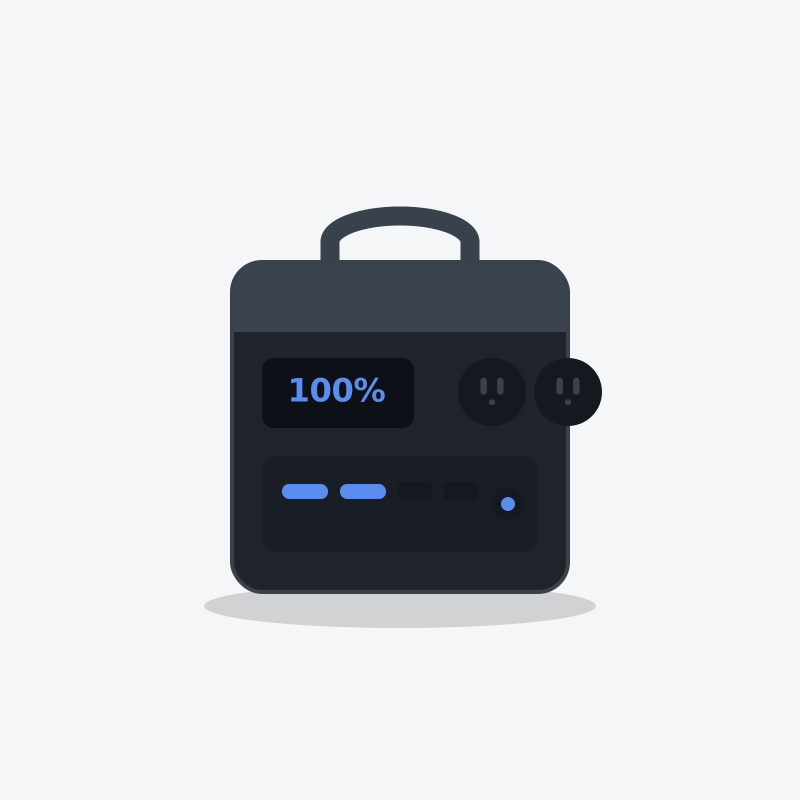
Anker
Anker SOLIX C300
The one you actually carry. Small, quiet, and built better than anything else this size.
- Capacity
- 288 Wh
- AC output
- 300W
- Weight
- 9.1 lb
What's good
- Built-in light that is actually useful, not a gimmick
- Three USB-C ports, one of them high wattage for laptops
- Charges from empty in about an hour
What's annoying
- 300W ceiling — this powers electronics, not appliances
- Small capacity disappears fast if you plug in anything with a motor
- Priced close to units with three times the capacity on sale
Who this is wrong for
Home backup. If your outage plan is a 288Wh box, you don't have an outage plan.
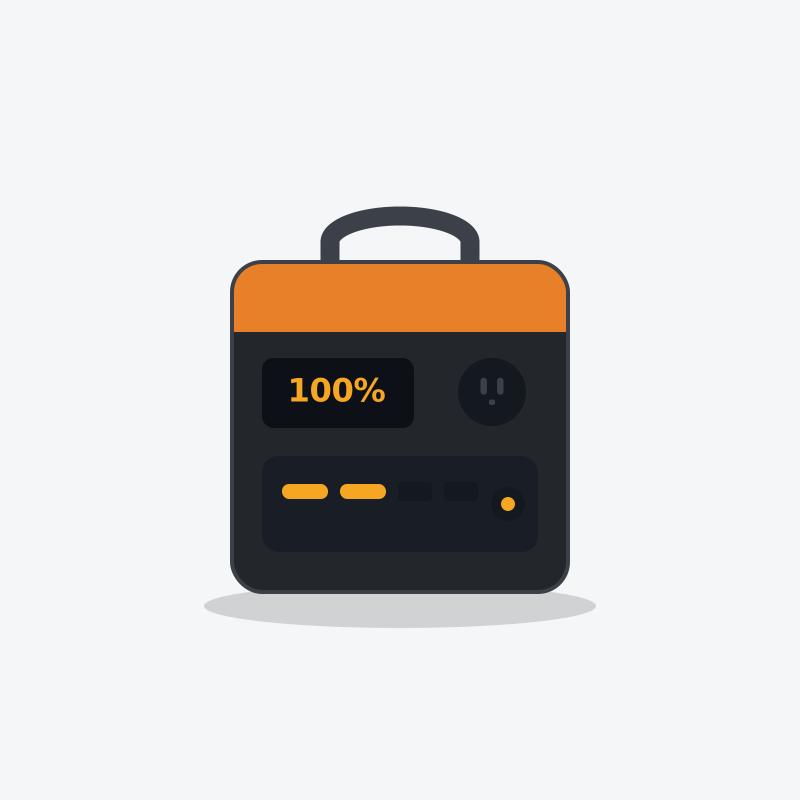
Jackery
Jackery Explorer 300 Plus
Specs unverifiedA laptop-and-phones box. Honest about what it is, which is refreshing.
- Capacity
- 288 Wh
- AC output
- 300W
- Weight
- 8.27 lb
What's good
- Under 9 lb, so it goes in a backpack without a fight
- LiFePO4 at this size and price is not a given
- Silent under light loads
What's annoying
- One AC outlet
- 300W means no kettle, no toaster, no coffee maker
- Not a backup plan — it's a convenience
Who this is wrong for
Anything with a heating element or a motor. It will trip and you'll be annoyed.
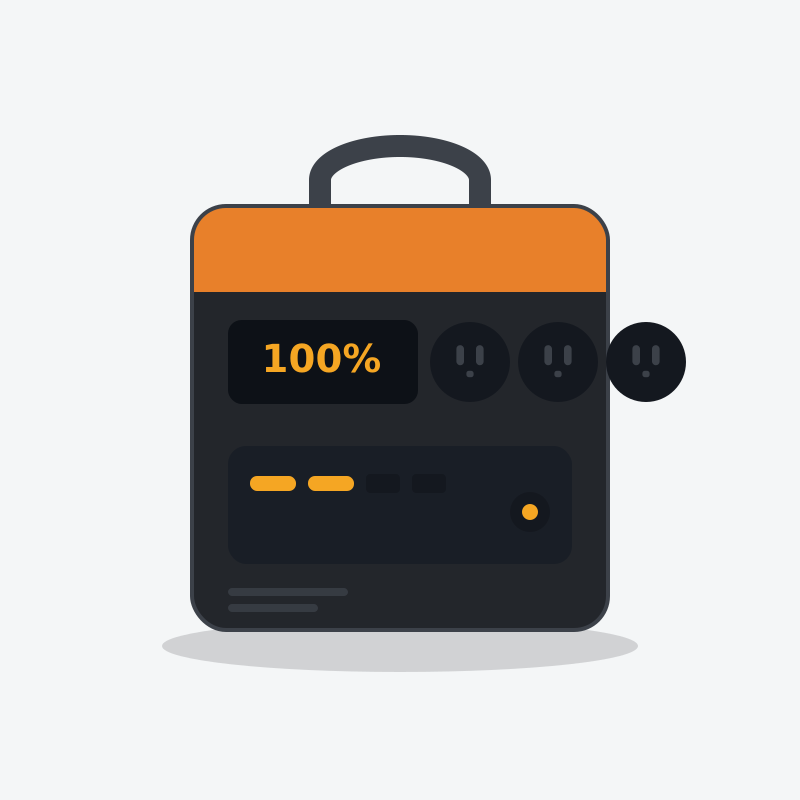
Jackery
Jackery Explorer 1000 v2
The friendliest unit here for someone who has never owned a battery. Buttons make sense, the screen makes sense.
- Capacity
- 1,070 Wh
- AC output
- 1,500W
- Weight
- 23.8 lb
What's good
- Lighter than most 1kWh rivals, and the handle is genuinely comfortable
- The interface explains itself — no manual needed
- US support is easy to reach compared with smaller brands
What's annoying
- Only three AC outlets
- No expansion battery option at all
- You pay a premium for the brand name and the friendly design
Who this is wrong for
Spec chasers. You can get more watts per dollar elsewhere, and Jackery knows it.
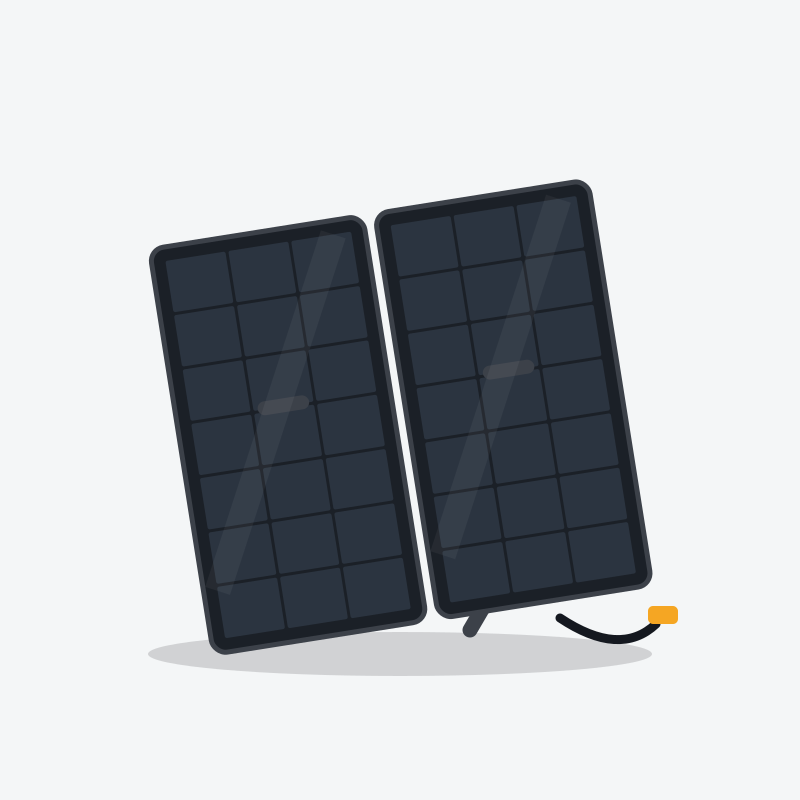
Jackery
Jackery SolarSaga 100W Air
Specs unverifiedThe easy one. Unfold, prop, plug in, done. You pay for that simplicity.
What's good
- Genuinely idiot-proof setup
- Built-in USB ports so it charges a phone directly
- Light enough to move with the sun
What's annoying
- Proprietary connector limits you to Jackery without an adapter
- 100W is not enough panel for a 1kWh station
- IP65 means splash-resistant, not leave-it-in-a-storm
Who this is wrong for
Anyone trying to recharge a 2kWh unit. One of these will take days.
Questions people actually ask
What size power station do I need for camping?
Can I run a portable fridge off one?
Do I need a solar panel for camping?
Is it safe to use a power station in a tent?
What about running a coffee maker?
Who wrote this
Dhruvil Domadiya
Founder and editor, GreenCommuteGuide
I started GreenCommuteGuide because backup power is sold with numbers that sound impressive and mean very little — watt-hours on the box, surge ratings that turn out to be a boost mode, charge times quoted to 80% and printed as though they were full. I set the rules this site runs on: every spec is checked against the manufacturer's own documentation, anything we have not verified is marked as unverified on the page rather than quietly published, prices are never shown because they go stale, and every review names at least one product not to buy and who it is wrong for. Where I have not tested something myself, the page says so.
- · Sets and enforces the editorial standards on this site — unverified claims are flagged on the page, and the build fails if they are not
- · Specs are taken from manufacturers' own published documentation, never from retailer listings, and the source and date are recorded for each product
- · No payment is accepted for a rating, a ranking, or a positive verdict
Read this next
- Home Outage & BackupBest Solar Generators Under $1,000This is the bracket where backup power stops being a toy and starts saving your food. Here is what to get, and the trap to avoid.
- RV, Camping & Off-GridBest Solar Panels for Portable Power StationsThe rated watts on the box is not what you get. Here is what a panel really produces, how many you need, and when panels are a waste of money.
- Home Outage & BackupBest Solar Generators for Power Outages in 2026Which battery actually gets your family through the night, which one is a waste of money, and how to tell the difference before you spend.
- Home Outage & BackupBest Budget Power Stations Under $500At this money you are buying a convenience, not a backup plan. Here is what that actually covers, and who should save up instead.