Run This Appliance
Why Does My Fridge Trip the Power Station?
The compressor spikes to about 900 watts for half a second. That is the whole answer, and no amount of extra battery fixes it.
We earn a commission on purchases made through links on this page, at no extra cost to you. How this works.

What's in this article
Why the two numbers are different
Your fridge label says something like 150W. That's the running draw — what the compressor uses once it's already spinning.
Getting a motor moving from a dead stop takes far more. For that fraction of a second, the fridge is asking for six times its normal appetite.
Your power station has two separate limits:
- Continuous output — what it can supply all day (e.g. 1,800W)
- Surge rating — what it can supply for a moment (e.g. 2,700W)
Trip on the fridge and you've hit the second one.
What rating you actually need
Aim for 1,200W of surge minimum, and more is better. In practice any decent 1kWh unit rated 1,800W continuous with 2,400W+ surge handles a household fridge without noticing.
Swipe the table sideways to see every column.
| Price | |||||||
|---|---|---|---|---|---|---|---|
| BluettiBluetti AC180LiFePO4 · expandable | 1,152 Wh | 1,800W | 2,700W | 35.3 lb | 1h 48m | 5 yr | Check price for Bluetti AC180 (opens in a new tab, affiliate link) |
| AnkerAnker SOLIX C1000LiFePO4 · expandable | 1,056 Wh | 1,800W | 2,400W | 28.44 lb | 58 min | 5 yr | Check price for Anker SOLIX C1000 (opens in a new tab, affiliate link) |
| EcoFlowEcoFlow DELTA 2LiFePO4 · expandable | 1,024 Wh | 1,800W | 2,700W | 27 lb | 1h 20m | 5 yr | Check price for EcoFlow DELTA 2 (opens in a new tab, affiliate link) |
Specs come from data/products.json. Capacity is the figure on the box — real usable output is roughly 85% of it once you account for inverter losses.
Why it worked yesterday and failed today
Startup surge isn't a fixed number. It goes up when:
The compressor is cold. First start after a long off period is the hardest.
The fridge is full and warm. More work to do, more current drawn.
Your battery is low. Voltage sags as a pack empties, and the inverter has less headroom to give.
So a unit that only just cleared the spike on a good day will fail on a bad one. That's why you want margin rather than a number that technically fits.
Three things to try right now
1. Unplug everything else first. Then plug in the fridge alone. If it starts, your problem was total load, not surge — add things back one at a time.
2. Charge the unit fully. More headroom at the top of the pack.
3. Check for an "X-Boost" or "Power Lifting" mode. Several brands have a mode that runs high-wattage loads at reduced power. It's not a surge booster, but it sometimes gets a stubborn appliance going.
If none of that works, the unit genuinely can't start your fridge and no setting will change it.
The workaround worth knowing
You don't have to run the fridge continuously.
Run it for an hour, unplug for three, repeat. A closed fridge barely moves in temperature over three hours, and you'll stretch a battery dramatically further.
That doesn't fix a surge trip — the compressor still has to start each time — but it's the right way to run a fridge on battery once you have a unit that can start it.
The short version
Surge, not capacity. Check that number before you buy anything, and give yourself margin rather than a figure that only just fits.
It's the single most common reason people are disappointed by a power station they otherwise chose well.
The picks, in detail
Specs come from data/products.json, so they're the same everywhere on this site.
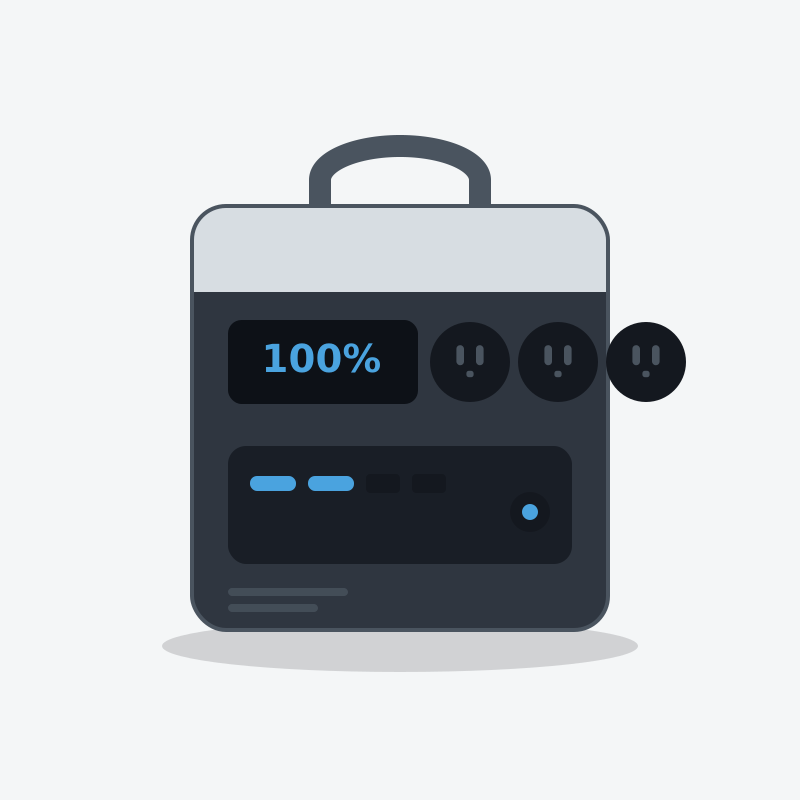
EcoFlow
EcoFlow DELTA 2
The one most people should buy. It refills fast enough that a short sunny break between storm bands actually matters.
- Capacity
- 1,024 Wh
- AC output
- 1,800W
- Weight
- 27 lb
What's good
- Wall recharge is genuinely quick — useful when power flickers back for an hour
- LiFePO4 cells, so it tolerates being left plugged in for years
- Six AC outlets means no daisy-chained power strips on the kitchen counter
- Add an extra battery later instead of buying a whole second unit
What's annoying
- The fan is audible in a quiet bedroom at night
- 1800W ceiling rules out most space heaters and hair dryers
- Expansion batteries cost nearly as much as the unit itself
Who this is wrong for
Anyone who needs to power a well pump, an electric water heater or a central AC. It will not start them, and it is not a whole-home unit.
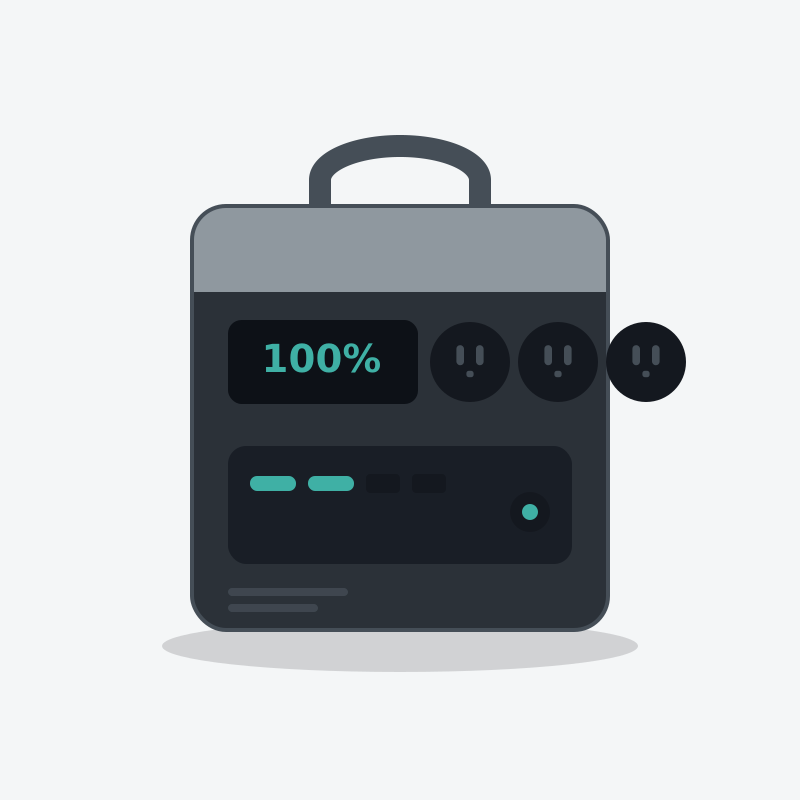
Bluetti
Bluetti AC180
More watts per dollar than the famous brands, if you don't mind a slightly clunkier app.
- Capacity
- 1,152 Wh
- AC output
- 1,800W
- Weight
- 35.3 lb
What's good
- 2,700W of surge headroom, which is what actually starts a fridge compressor
- More capacity than the Jackery 1000 for often less money
- Takes expansion batteries, so it can grow to a serious bank later
- Quiet charging mode keeps it civilised in a bedroom
What's annoying
- 35 lb is heavy for 1.1kWh
- The app has historically been the weakest of the four big brands
- Full wall recharge is slower than the headline number suggests - the fast figure everyone quotes is to 80%, not full
- Only one USB-C port
Who this is wrong for
Anyone who wants hand-holding. Bluetti's documentation assumes you'll figure it out.
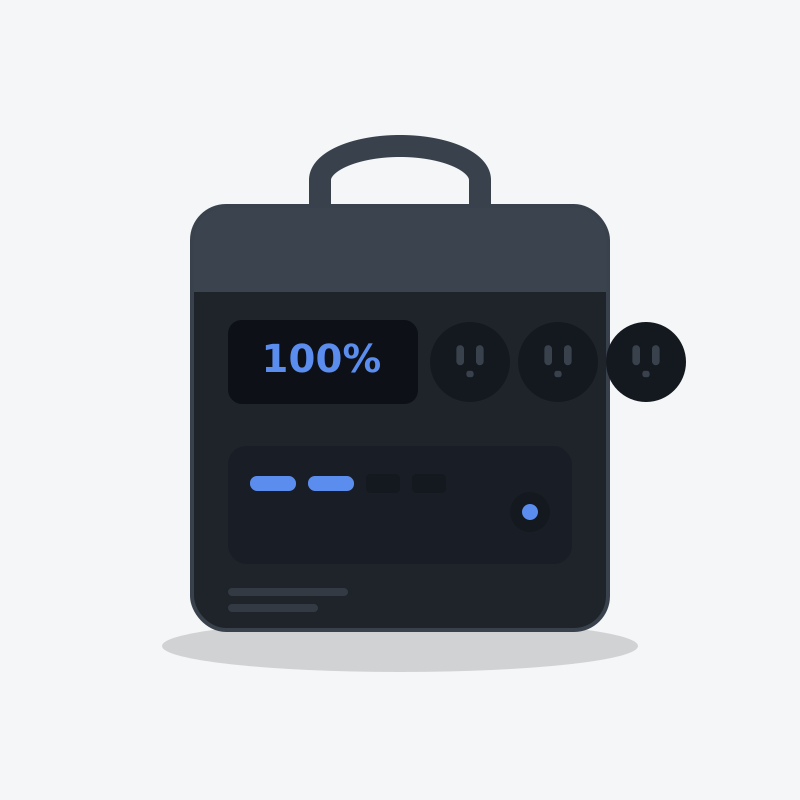
Anker
Anker SOLIX C1000
The best-built 1kWh unit on the market, and the one that fits an RV bay without a shoehorn.
- Capacity
- 1,056 Wh
- AC output
- 1,800W
- Weight
- 28.44 lb
What's good
- The most compact 1kWh box here — it genuinely fits where others don't
- Anker's warranty service is the least painful in this category
- Full wall recharge in under an hour
- Quiet fan behaviour under moderate load
What's annoying
- Expansion battery caps you at about 2,112Wh and is expensive
- Fewer solar input options than EcoFlow
- Anker discounts less often, so you rarely catch a deep sale
Who this is wrong for
People who need to run more than 1800W. And it won't grow with you — expansion is limited.
Questions people actually ask
Why does my fridge trip my power station?
Will a bigger battery stop my fridge tripping the unit?
What surge rating do I need for a refrigerator?
Why did it work yesterday and trip today?
Can a soft starter help a fridge?
Who wrote this
Dhruvil Domadiya
Founder and editor, GreenCommuteGuide
I started GreenCommuteGuide because backup power is sold with numbers that sound impressive and mean very little — watt-hours on the box, surge ratings that turn out to be a boost mode, charge times quoted to 80% and printed as though they were full. I set the rules this site runs on: every spec is checked against the manufacturer's own documentation, anything we have not verified is marked as unverified on the page rather than quietly published, prices are never shown because they go stale, and every review names at least one product not to buy and who it is wrong for. Where I have not tested something myself, the page says so.
- · Sets and enforces the editorial standards on this site — unverified claims are flagged on the page, and the build fails if they are not
- · Specs are taken from manufacturers' own published documentation, never from retailer listings, and the source and date are recorded for each product
- · No payment is accepted for a rating, a ranking, or a positive verdict
Read this next
- Battery & Tech BasicsWhy Did My Power Station Shut Off By Itself?Nine times out of ten it is the startup surge, not the battery. Here is how to tell which of the five causes you have, in about a minute.
- Sizing & CalculatorsSurge Watts vs Running Watts: What Actually Trips Your UnitYour battery is big enough and it still shut off. This is why, and it is the spec almost nobody checks before buying.
- Run This ApplianceCan a Solar Generator Run a Refrigerator?Yes, and it takes less battery than you have been told. Here is the math, the surge trap, and the size that actually saves your food.
- Home Outage & BackupHow to Keep Food Cold During a Power OutageYour fridge holds cold for four hours. Your freezer holds it for two days. Here is how to stretch both, and exactly when to throw things out.