Battery & Tech Basics
Is It Safe to Use a Power Station Indoors?
Yes, and that is the entire reason they beat gas generators. Here are the four real risks, and the one that actually kills people.
We earn a commission on purchases made through links on this page, at no extra cost to you. How this works.
What's in this article
Somebody in your family will ask this before you plug it in the first time. Usually while you're carrying it into the bedroom at midnight.
The answer is yes. And the reason it's yes is the whole reason these things replaced generators.
The difference that matters
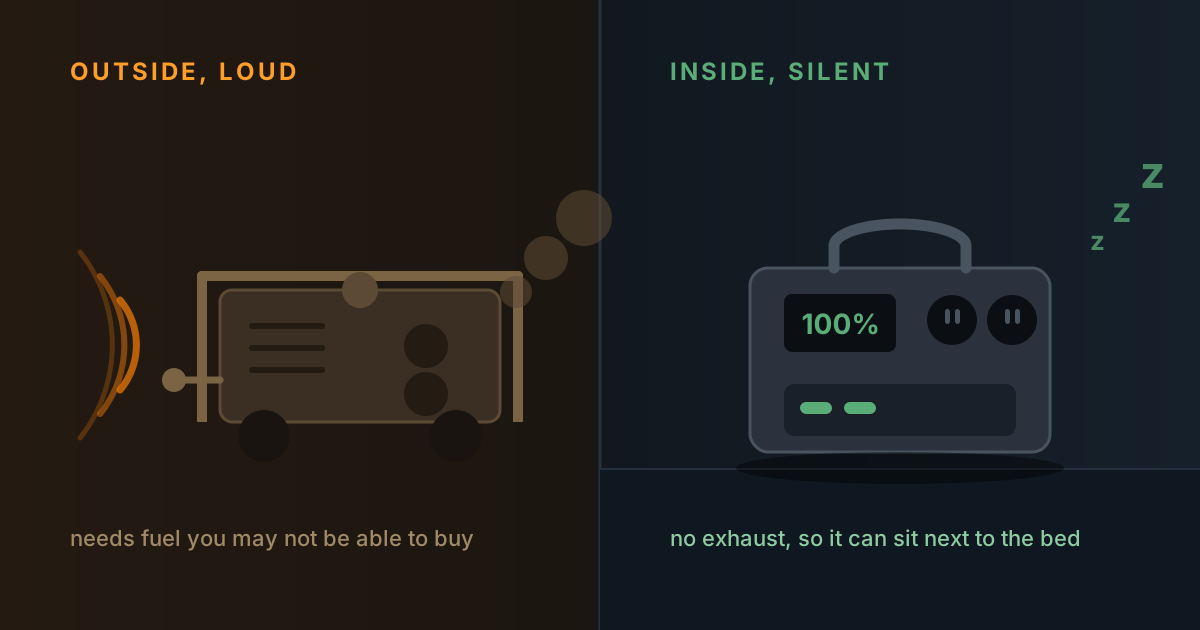
A gas generator burns fuel. Burning fuel produces carbon monoxide — invisible, odorless, and it kills people in the US every single year after storms. In garages, near open windows, in their sleep.
A battery power station burns nothing. There is no exhaust. There is nothing to vent.
That's not a marketing distinction. It's the reason you can put one on a nightstand next to a CPAP and go to sleep.
So what are the actual risks?
Four, and none of them is fumes.
1. Heat and airflow
The unit needs to move air. Under real load the fan runs and the case gets warm.
Don't bury it in a closet under blankets. Don't run it inside a sealed cabinet. A few inches of clearance on the vents is all it wants.
Charging while also discharging heavily is when they run hottest — worth knowing if you leave one plugged in as a UPS.
2. Cheap uncertified units
This is where the genuine risk lives.
A lithium pack from an established brand has a battery management system, protection circuits, and certification behind it. A no-name unit at a suspiciously low price may have none of that, and you cannot inspect cell quality after the fact.
Look for UL listing — UL 2743 covers portable power stations specifically — and FCC compliance. A real brand states this. A listing that won't is answering your question.
3. Damage you can't see
A pack that's been dropped hard, punctured, or soaked has internal damage you can't inspect.
If a unit is swollen, hot to the touch when idle, making unusual noises, or smells acrid, stop using it and get it outside. That's the point where the "batteries are safe" conversation ends.
4. Overloading a circuit while charging
Fast-charging units pull real current. A DELTA 2 charging at full speed on the same circuit as a space heater can trip a breaker.
Not dangerous, just annoying. Spread the load across circuits.
Chemistry matters here too
LiFePO4 is substantially more resistant to thermal runaway than the NMC lithium-ion in your laptop. verify It's not fireproof — don't puncture it — but the failure mode is far less violent.
That's part of why we recommend LiFePO4 for anything living inside your house, and it's a bigger deal than the cycle-life argument people usually lead with.
Where to put it
Good: a hallway, a bedroom floor, under a desk, on a hard surface with clearance.
Bad: a hot garage, a sealed cabinet, on a bed or sofa while charging, a car in summer, an unheated attic.
Heat is what ages the cells fastest, so the same rule that keeps it safe also makes it last longer. Inside the house, out of direct sun, is right on both counts.
Sleeping next to one
People do this every night for CPAP machines and it's fine.
Under light loads — a CPAP is around 40 watts — most units barely spin their fan at all. Some are rated in the mid-20s of decibels, which is quieter than a fridge. verify
Under heavy load they get audibly louder. If you're running a fridge off it overnight in a small bedroom, you'll hear it.
Straight answer
Buy from a brand you've heard of, check it's UL listed, give it room to breathe, and use it wherever you like.
The thing you should actually be careful about isn't the battery in your bedroom. It's the gas generator someone puts in the garage because it's raining.
The picks, in detail
Specs come from data/products.json, so they're the same everywhere on this site.
EcoFlow
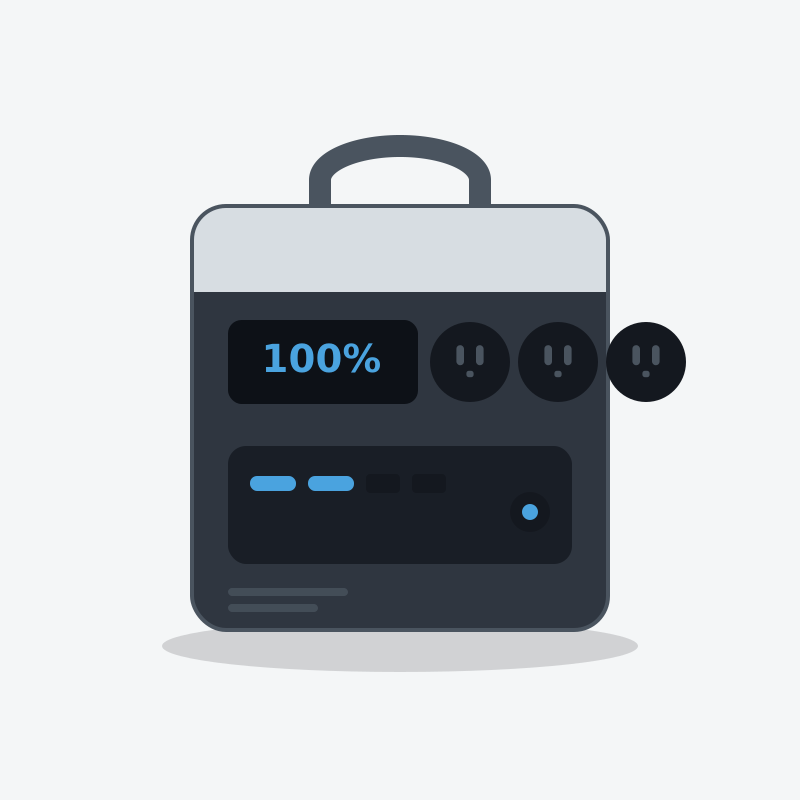
EcoFlow DELTA 2
The one most people should buy. It refills fast enough that a short sunny break between storm bands actually matters.
- Capacity
- 1,024 Wh
- AC output
- 1,800W
- Weight
- 27 lb
What's good
- Wall recharge is genuinely quick — useful when power flickers back for an hour
- LiFePO4 cells, so it tolerates being left plugged in for years
- Six AC outlets means no daisy-chained power strips on the kitchen counter
- Add an extra battery later instead of buying a whole second unit
What's annoying
- The fan is audible in a quiet bedroom at night
- 1800W ceiling rules out most space heaters and hair dryers
- Expansion batteries cost nearly as much as the unit itself
Who this is wrong for
Anyone who needs to power a well pump, an electric water heater or a central AC. It will not start them, and it is not a whole-home unit.
Anker
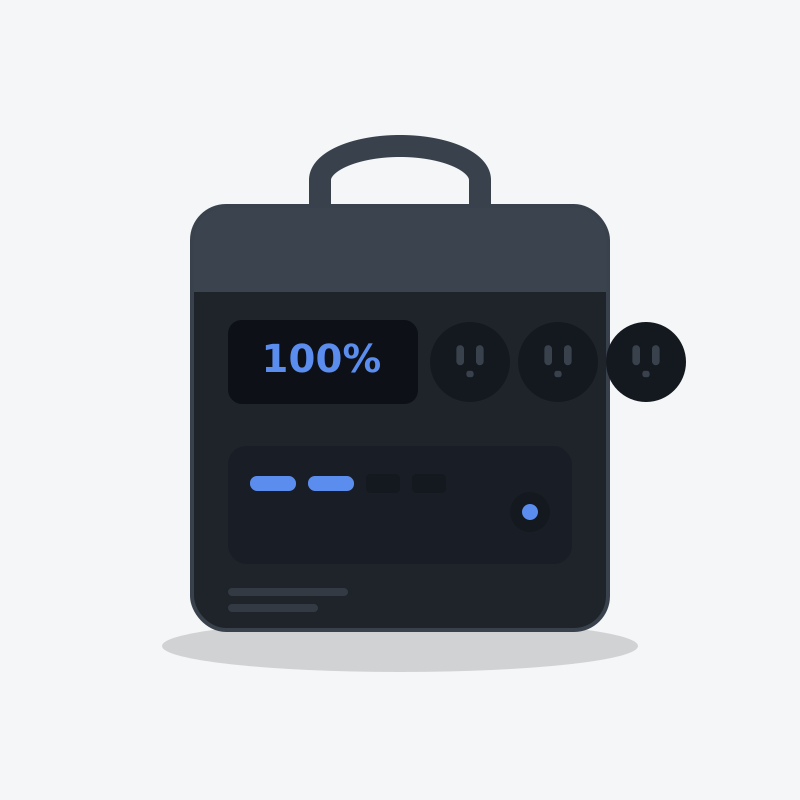
Anker SOLIX C1000
The best-built 1kWh unit on the market, and the one that fits an RV bay without a shoehorn.
- Capacity
- 1,056 Wh
- AC output
- 1,800W
- Weight
- 28.44 lb
What's good
- The most compact 1kWh box here — it genuinely fits where others don't
- Anker's warranty service is the least painful in this category
- Full wall recharge in under an hour
- Quiet fan behaviour under moderate load
What's annoying
- Expansion battery caps you at about 2,112Wh and is expensive
- Fewer solar input options than EcoFlow
- Anker discounts less often, so you rarely catch a deep sale
Who this is wrong for
People who need to run more than 1800W. And it won't grow with you — expansion is limited.
Anker
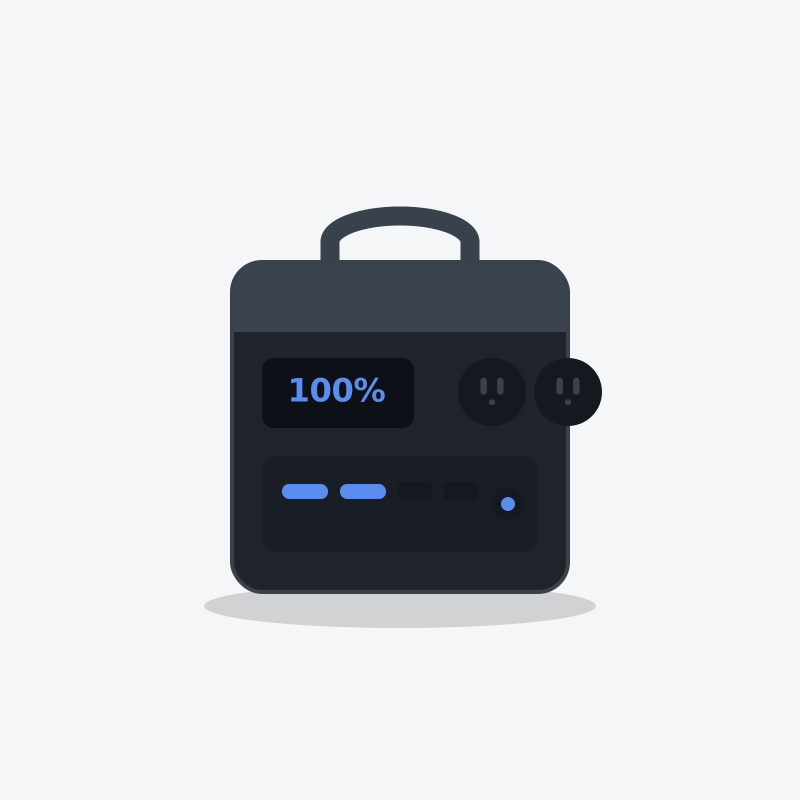
Anker SOLIX C300
The one you actually carry. Small, quiet, and built better than anything else this size.
- Capacity
- 288 Wh
- AC output
- 300W
- Weight
- 9.1 lb
What's good
- Built-in light that is actually useful, not a gimmick
- Three USB-C ports, one of them high wattage for laptops
- Charges from empty in about an hour
What's annoying
- 300W ceiling — this powers electronics, not appliances
- Small capacity disappears fast if you plug in anything with a motor
- Priced close to units with three times the capacity on sale
Who this is wrong for
Home backup. If your outage plan is a 288Wh box, you don't have an outage plan.
Questions people actually ask
Can you use a solar generator inside the house?
Can you use a power station in a bedroom while sleeping?
Do power stations give off fumes?
Is it safe to charge a power station overnight indoors?
What certifications should I look for?
Who wrote this
Dhruvil Domadiya
Founder and editor, GreenCommuteGuide
I started GreenCommuteGuide because backup power is sold with numbers that sound impressive and mean very little — watt-hours on the box, surge ratings that turn out to be a boost mode, charge times quoted to 80% and printed as though they were full. I set the rules this site runs on: every spec is checked against the manufacturer's own documentation, anything we have not verified is marked as unverified on the page rather than quietly published, prices are never shown because they go stale, and every review names at least one product not to buy and who it is wrong for. Where I have not tested something myself, the page says so.
- · Sets and enforces the editorial standards on this site — unverified claims are flagged on the page, and the build fails if they are not
- · Specs are taken from manufacturers' own published documentation, never from retailer listings, and the source and date are recorded for each product
- · No payment is accepted for a rating, a ranking, or a positive verdict
Read this next
- Home Outage & BackupSolar Generator vs Gas Generator: The Honest ComparisonGas wins on raw power and price. Battery wins on everything else. Here is exactly where each one falls apart, including the part that kills people.
- Battery & Tech BasicsLiFePO4 vs Lithium-Ion: Which Battery Lasts Longer?One chemistry lasts six times longer and does not catch fire. The other is lighter. Here is why almost every good power station now uses the first one.
- Battery & Tech BasicsWhy Won't My Power Station Turn On?Dead screen, no lights, nothing. Six causes in order of likelihood — and the deep-discharge one that looks exactly like a dead unit but usually is not.
- Run This ApplianceBest Solar Generator for a CPAP MachineYou need one night, not a whole house. Turn the humidifier off and a small battery does the job for a fraction of what people tell you to spend.